







Menière’s Disease Symptoms, Diagnosis and Treatment – What Patients Need To Know
Menière’s disease is a disorder of the inner ear that causes recurrent vertigo attacks, often with fluctuating hearing loss, tinnitus, and a sense of pressure in the ear. Menière’s disease symptoms can be unpredictable and disabling, but many patients achieve good control with proper diagnosis and treatment.
What are the symptoms of Menière’s disease?

Typical symptoms include:
- Sudden vertigo attacks lasting 20 minutes to several hours
- Nausea or vomiting
- Hearing loss, often fluctuating but may decline gradually over time.
- Tinnitus (ringing or roaring sound)
- Ear pressure or fullness
- Imbalance after attacks
What causes Menière’s disease?
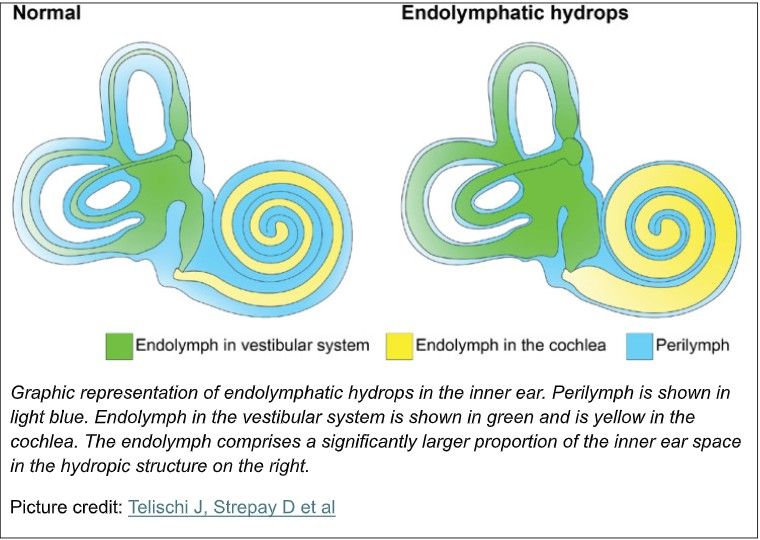
Most evidence points to endolymphatic hydrops — abnormal fluid build-up in the inner ear.
Possible contributors:
- Fluid regulation problems
- Autoimmune processes
- Viral triggers
- Genetic susceptibility
There is no single known cause, and likely several mechanisms are involved.
How is Menière’s disease diagnosed?

Diagnosis is clinical, based on symptoms and hearing results.
Key assessments include:
- Thorough history and symptom pattern
- Repeated hearing assessments to note fluctuations
- Vestibular testing
- MRI to exclude other problems
Why clinical vestibular assessment still matters — even if MRI shows hydrops

Modern MRI can visualise inner-ear fluid, but a randomised controlled trial found that clinical vestibular assessment still outperforms MRI for real-world diagnosis of Menière’s disease.
The study concluded that MRI evidence of hydrops should not replace functional assessment, because:
- Some people with hydrops on MRI have no symptoms
- Some symptomatic patients show minimal hydrops
- Vestibular tests reflect how the system works, not just what it looks like
Diagnosis should prioritise symptoms, hearing profile, and vestibular function — with MRI as a supporting tool, not the primary test. This matters because treatment decisions should be based on functional impairment, not imaging alone.
Can MRI alone diagnose Menière’s disease?
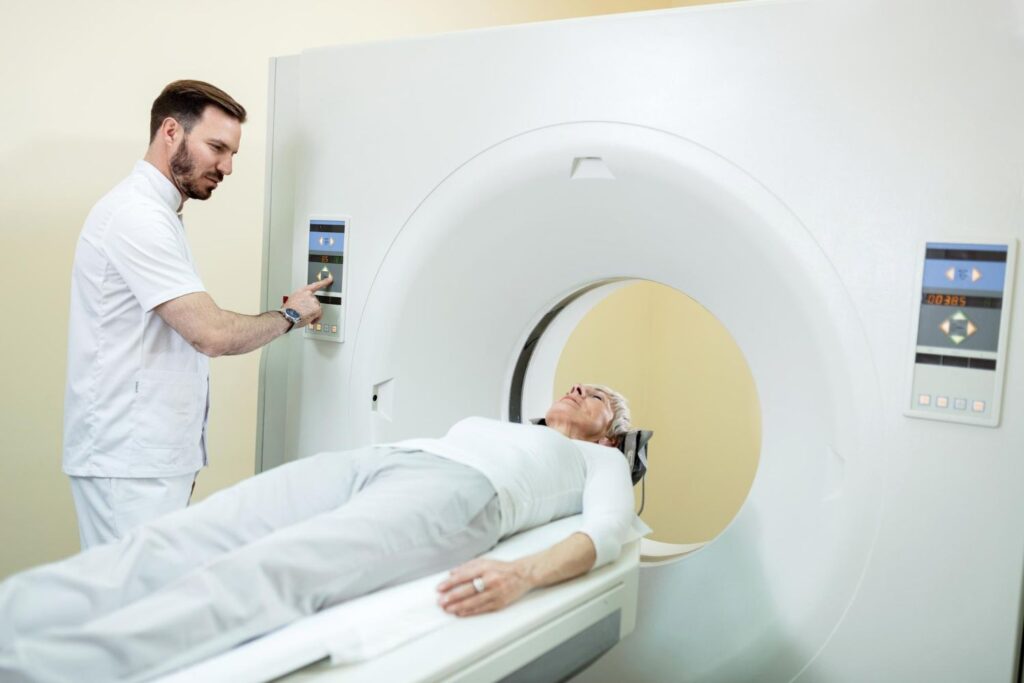
MRI can support diagnosis but cannot confirm or exclude it.
- Negative MRI does not rule it out.
- Positive MRI does not prove it.
Clinical assessment remains the gold standard.
Is there a cure for Menière’s disease?

While it is a long-term condition, which may require certain life-style changes. However, if accurately diagnosed, a proper management regime can be crafted to:
- Reduce vertigo attacks
- Stabilise symptoms
- Preserve hearing, when possible
- Improve quality of life
What are the treatment options for Menière’s disease?
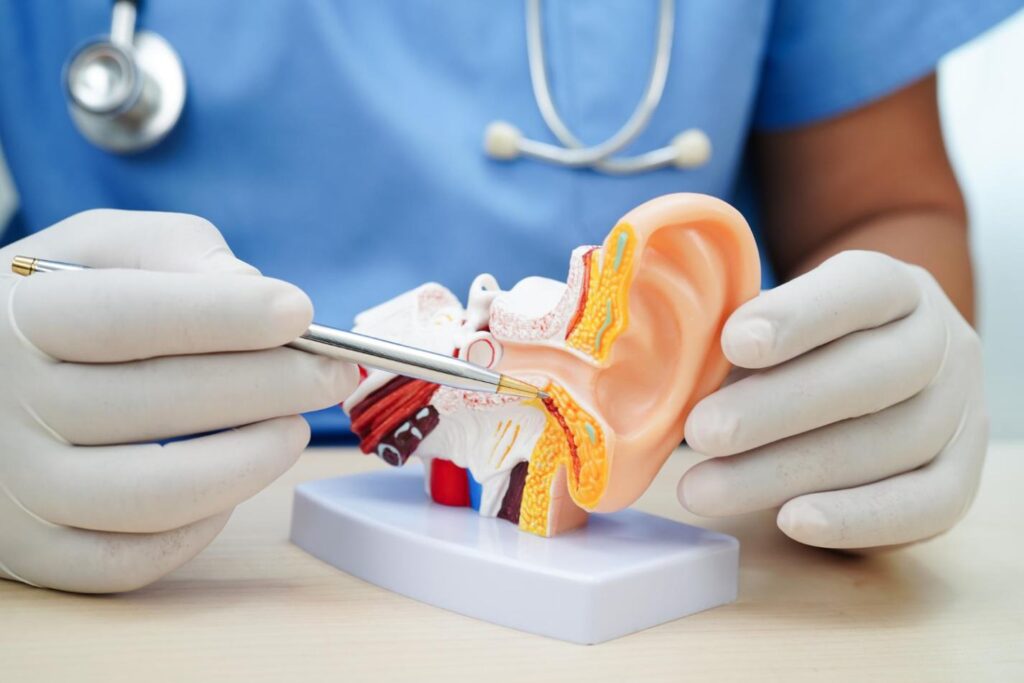
Here are a few of the things that are often offered in a best-practice management plan:
Lifestyle & Medication
Often first line because they are low-risk:
- Simple salt moderation
- Hydration
- Caffeine/alcohol moderation
- Diuretics for some patients
These help some, not all.
Ear Injections
- Lower risk to hearing
- May reduce attack frequency
Gentamicin
- Very effective for vertigo
- Higher risk of permanent hearing loss
Used when symptoms are severe or disabling.
Surgery
Reserved for cases failing all other treatment.
May provide excellent vertigo control, but risk to hearing can be significant.
What is the long-term outlook?
- Many patients achieve good vertigo control
- Hearing may decline gradually, but can be helped with technology
- Vestibular exercise help with long-term balance
- Quality of life usually improves with appropriate management
Early assessment and tailored treatment matter more than any single intervention.
Frequently Asked Questions
Q.1. Is Menière’s disease dangerous?
It is not life-threatening, but can be disabling, if untreated.
Q.2. Is Menière’s disease permanent?
Symptoms fluctuate, often helped by appropriate management, but the underlying condition is long-term.
Q.3. Can diet cure Menière’s disease?
No, but dietary changes may help control symptoms for some patients.
Q.4. Can Menière’s cause permanent deafness?
Hearing often declines over time, but the degree varies. In most cases, this can be managed well with technology
Key Messages for Patients
- Menière’s disease is diagnosed clinically
- MRI can show inner-ear fluid changes, but is not definitive
- A randomised trial recommends prioritising clinical and vestibular assessment for both the diagnosis and management
- Treatment is stepwise and personalised
- Many people achieve good symptom control with proper management
References
- Gao, Y., Ma, X., Wang, Z., Guo, J., Lun, X., Wang, Y., Yuan, J., Li, C., Liang, C., & Lu, H. (2024). Restriction of salt, alcohol and coffee intake and Ménière’s disease: Insight from Mendelian randomisation study.
🔗 https://pubmed.ncbi.nlm.nih.gov/39351491 - Hussain, K., Murdin, L., & Schilder, A. G. M. (2018). Restriction of salt, caffeine and alcohol intake for the treatment of Ménière’s disease or syndrome. Cochrane Database of Systematic Reviews, 2018(12), CD012173.
🔗 https://pubmed.ncbi.nlm.nih.gov/30596397/
Magnan, J., Özgirgin, O. N., Trabalzini, F., Lacour, M., Escamez, A. L., Magnusson, M., Güneri, E. A., Guyot, J. P., Nuti, D., & Mandalà, M. (2018). European position statement on diagnosis and treatment of Ménière’s disease. Journal of International Advanced Otology, 14(2), 317–321.
🔗 https://www.ncbi.nlm.nih.gov/pmc/articles/PMC6354459/