



Top 10 Early Signs of Vestibular Disorders That People Ignore
In the UK, we are famously good at “keeping calm and carrying on.” If we feel a bit off-balance while walking the dog or get a fleeting moment of lightheadedness while browsing the aisles at the supermarket, we usually put it down to a late night, too much caffeine, or simply “getting older.”
But what if those small, nagging sensations aren’t just signs of a busy life?
Our vestibular system, the delicate machinery in our inner ear that tells our brain where we are in space, is remarkably complex. When it starts to glitch, it doesn’t always result in a dramatic, room-spinning episode of vertigo. Often, the early signs are subtle, strange, and incredibly easy to dismiss. This is where seeking treatment for dizziness through vestibular rehabilitation therapy early on can make a world of difference.
If you’ve been feeling “not quite right” lately, here are the top 10 early signs of vestibular disorders that people commonly ignore.
1. The "Supermarket Effect" (Visual Overload)

Have you ever walked into a large shop like Tesco or IKEA and felt a sudden wave of disorientation? It’s not just the stress of the weekly shop. For people with early vestibular issues or a vestibular migraine, “busy” environments, aisles filled with colourful products or flickering lights, can be overwhelming. This disorientation is often the first sign that you might eventually need vestibular rehabilitation therapy to help your brain process visual information correctly again.
2. Difficulty Walking in the Dark

Most of us can navigate a dimly lit hallway at night. However, if you find yourself reaching for the wall because you feel “lost” in space, your vestibular system might be underperforming. Without visual cues, a weakened balance system becomes obvious. This is a key area where vestibular rehabilitation exercises, such as balance training in low light, can help.
3. "Brain Fog" and Mental Fatigue
It’s easy to blame a lack of focus on a poor night’s sleep. But when the signals from your ears are garbled, your brain works twice as hard just to keep you upright. This “cognitive load” is why many patients starting vestibular rehabilitation therapy report feeling mentally exhausted by mid-afternoon.
4. Sensitivity to Scrolling or Digital Motion
Do you feel slightly nauseous when scrolling through your phone? This is often a sign of visual-motion intolerance. Your brain gets a “motion” signal from your eyes but a “still” signal from your ears. Professionals at Audiology Planet often see this as an early warning sign that the balance system is struggling to integrate sensory data.
5. Sudden Clumsiness or Veering
If you find yourself habitually drifting to one side while walking down a corridor or accidentally bumping into doorframes, it is rarely just a case of being clumsy. It is often a sign that your brain’s internal “map” of your surroundings has become slightly misaligned. Vestibular physiotherapy is specifically designed to address this by recalibrating how your brain interprets space. Through a structured course of vestibular rehabilitation therapy, you can retrain your body to maintain a steady, straight path and regain your natural coordination.
6. A Feeling of "Fullness" in the Ear

People often mistake this for wax build-up. It feels like your ear is “clogged” or under pressure. While it could be a cold, persistent fullness, especially alongside dizziness, is a sign that your inner ear needs a professional check-up. Using advanced diagnostic tools like the O-Scope can help specialists determine if this fullness is linked to a balance disorder.
7. Discomfort with Heights
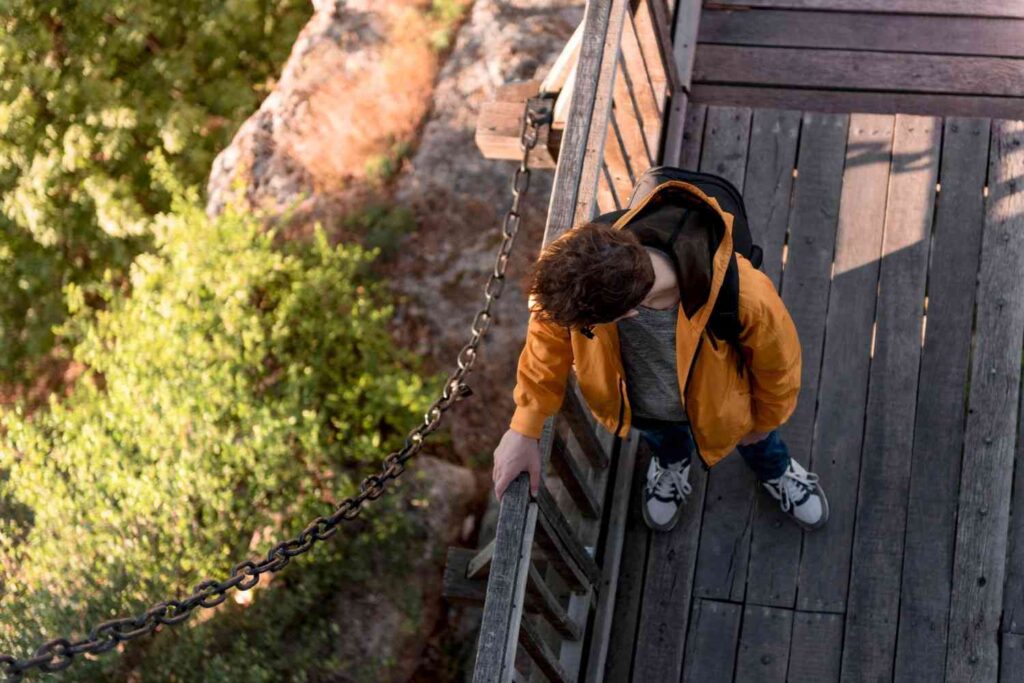
If you’ve suddenly developed a fear of heights, it might not be a phobia. When you are high up, your eyes lose the nearby ground as a reference point. If your ears aren’t picking up the slack, you feel unstable. This is another area where vestibular rehabilitation therapy can help desensitise the brain to these height-related triggers.
8. The "Hangover" Feeling (Without the Gin)
Do you ever wake up feeling “thick-headed” or slightly “rocky,” as if you’re on a boat? This persistent sense of being “off” is a common way people describe the need for treatment for dizziness and vertigo. Vestibular rehabilitation therapy aims to eliminate this “foggy” feeling by strengthening the vestibulo-ocular reflex.
9. Needing to Touch Surfaces While Standing
Notice your posture while standing in a queue. Do you instinctively reach for a table or a wall? Many do this because the input from their inner ears isn’t reliable. Vestibular physiotherapy focuses on reducing this “surface dependency” so you can stand confidently on your own two feet.
10. Tinnitus or Muffled Hearing

The hearing and balance organs are housed in the same tiny space. Often, a “hissing” or “buzzing” is the first warning shot. Seeking comprehensive Hearing Care is vital when this occurs, as hearing loss and balance issues often go hand-in-hand.
What is Vestibular Rehabilitation Therapy?
You might be wondering, what is vestibular rehabilitation therapy? It is a form of exercise-based treatment that aims to reduce dizziness, decrease fall risk, and improve balance.
Vestibular rehabilitation therapy works by promoting “central compensation.” The brain learns to use other senses (like vision and touch) to make up for the faulty signals coming from the inner ear. Because every patient is different, vestibular rehabilitation therapy is always tailored to your specific symptoms.
Can I Do This at Home?
While you might see vestibular rehabilitation exercises online, it is important to have a professional assessment first. These exercises often involve specific head, eye, and body movements. The goal of vestibular rehabilitation therapy is to actually trigger a small amount of dizziness in a controlled way so the brain can learn to ignore it.
By consistently performing vestibular rehabilitation therapy, most people find that their symptoms significantly diminish or disappear entirely within a few weeks or months.
Why You Shouldn't Just "Tough It Out"
Ignoring these signs can lead to an increased risk of falls and heightened anxiety. The earlier you begin vestibular rehabilitation therapy, the faster your brain can adapt.
If these signs sound familiar, keep a “dizziness diary” and visit your GP. Your balance is the foundation of your independence, don’t wait for the room to start spinning before you take action.
Frequently Asked Questions
Q.1. How long will it take before I actually start feeling better?
Most people notice a real difference in their steadiness after about four to six weeks, provided they keep up with the movements daily.
Q.2. Are the exercises going to make me feel sick?
You might feel a little “woozy” while doing them, but that’s actually the point—you’re gently pushing your brain to adapt until the movement doesn’t bother it anymore.
Q.3. Is it too late to start if I’ve been wobbly for years?
Not at all; the brain is surprisingly good at “re-wiring” itself to find balance, no matter how long you’ve been struggling.
Q.4. Do I have to see a GP before I start any therapy?
It’s always the smartest move to chat with your doctor first, just to make sure there isn’t something else like blood pressure causing the issues.
Q.5. Is the inner ear always the reason for feeling off-balance?
It’s the most common cause by far, but it’s always worth a proper check-up to rule out things like migraines or neck tension.