
For many, the color of wax in ears might not be the most important topic. Earwax might seem a little gross, but it is actually your body’s natural way of keeping your ears clean and protected from germs. Knowing how to “read” your earwax color is an easy way to tell if your ears are doing fine or if it’s time toOur body produces a natural substance check in with an audiologist.
Different Types of Ear Wax Color and What They Indicate
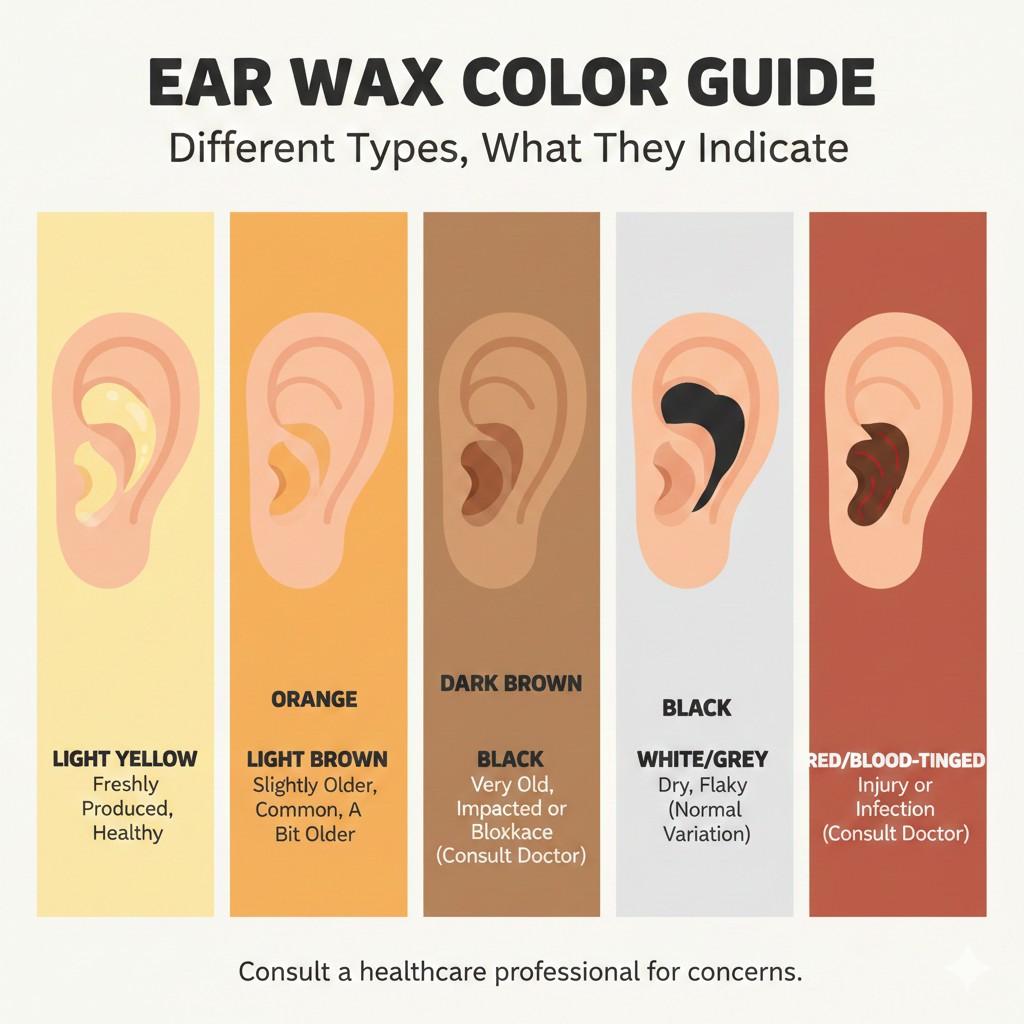
Did you know that the color of wax in ears changes as per its existence in your canal? Yes, that’s quite true. If the wax is freshly produced, it shall appear light in color. On the other hand, if it’s a dark earwax, that means it’s been exposed to oxygen in your canal for a longer time. Some of the most common cerumen color shades incorporate brown, earwax dark brown, black, white, ear wax orange, yellow and black color ear wax.
Such drastic shifts in your ear wax color depend on your total buildup, air exposure and age. Make sure that you are keeping a simple and proactive approach to your notable ear health.
Ear Wax Color | What It Means | Impact |
Yellow / orange color ear wax | Fresh, active wax | Healthy protection |
Dark Brown ear wax / Black | Older wax or oxidation | Normal; may cause blockage |
White / Flaky | Dry type earwax | Genetic; normal |
Gray | Environmental dust | Normal filtration |
What is the difference between wet and dry earwax?
Wet Earwax
Wet earwax has a very sticky and soft texture. You would spot it in a range of colors from yellow to dark brown. Since this ear wax type has much more moisture content, it usually traps a lot of debris.
Dry Earwax
On the other hand, dry earwax is quite flaky and has light gray or white scales. This variation is mainly genetic, with high prevalence in specific regional and ethnic groups.
It doesn’t matter whether you have wet or dry earwax. Both of them are considered quite normal. Neither of these types indicate any kind of health issues. They are just a reflection of your genetic makeup. Also, they have the ability to facilitate your ears with the essential protection.
When Should You Seek Medical Advice?
It is quite important for you to remember that in the majority of cases, earwax is normal and harmless. But, in certain cases, you should seek some professional help. Make sure you are seeking medical assistance, if your earwax is accompanied by earache, sudden muffled hearing or a feeling of fullness. Apart from that, if you notice any kind of green discharge or a foul odor, this could be a symptom of some serious infection.
You should never indulge in self-care remedies in such serious cases. Refrain from using cotton buds, hairpins or other sharp objects. Instead, you should choose visiting an ENT specialist or an audiologist for a safe assessment and treatment. These experts have the right knowledge and prior experience to provide your ears with the right treatment.
Conclusion
If you are able to understand your ear wax color, it shall help you stay informed about your ear health. Whether you are noticing a black color ear wax buildup or even a lighter color, they are just being a part of your body’s defense system. Always listen to your body and anytime if you notice sudden changes, or pain in your ear, consult an ENT specialist or an audiologist to keep your hearing healthy.
Frequently Asked Questions
Usually, greenish or foul-smelling wax is considered a sign of infection and thus, unhealthy.
Your ear wax can be both yellow or white. Yellow is common for "wet" wax, while "dry" ear wax is white.
Yes, lighter earwax is generally softer, more moist and newer.
Red or bloody earwax is usually bad and a sign of emergency.
In case of bloody earwax, reach out to an ENT specialist or audiologist for treating it.
Certain environmental factors like natural aging and oxidation of the wax, dust and your underlying infections could cause ear wax color changes.
In order to safely remove your earwax, you should seek help from an audiologist near you. They will treat you with professional micro-suction or other safe methods.