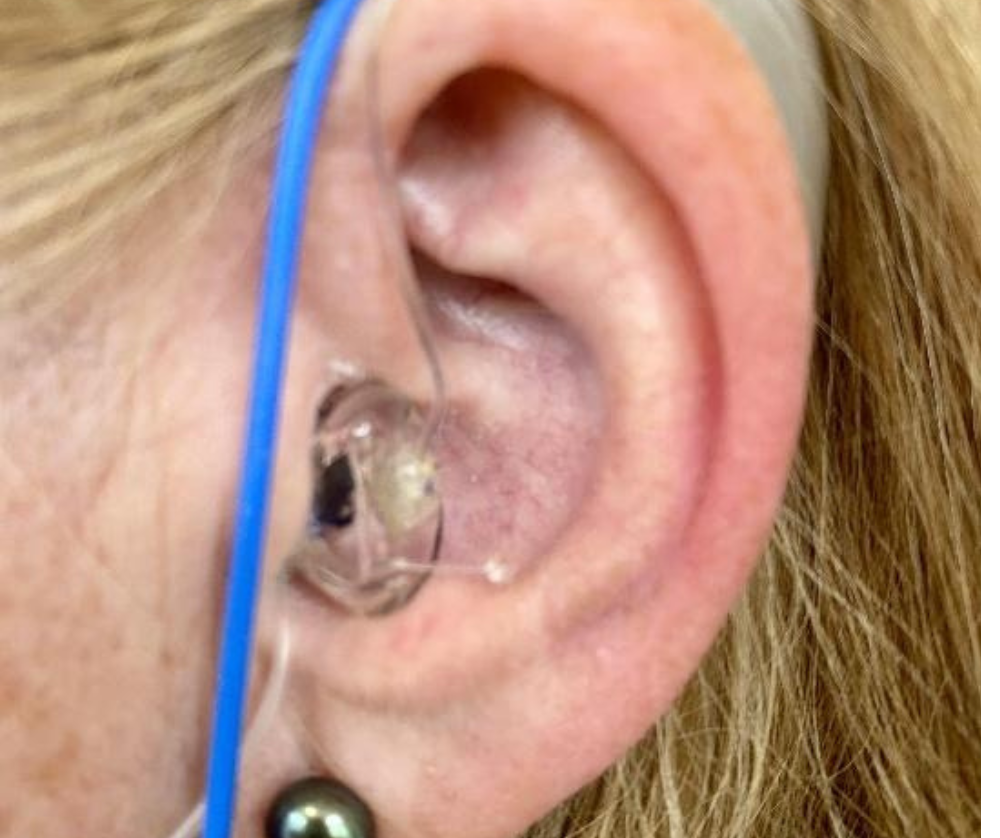
Here’s the Real Reason Speech Still Isn’t Clear
Do you wear a modern hearing aid but still struggle to understand speech?
Do voices sound loud enough, yet words feel blurred, muffled, or exhausting to follow?
If this sounds familiar, you’re not alone — and the issue usually isn’t that your hearing aid is “not working.” The real explanation goes much deeper than volume alone.
To understand why even the best hearing technology can fall short, we need to look at how hearing truly works and where its natural limitations lie.
How Hearing Really Works
Sound waves enter the ear canal and cause the eardrum to vibrate. These vibrations travel through three tiny bones in the middle ear, which mechanically amplify the sound and send it into the inner ear (the cochlea).
Inside the cochlea are approximately 16,000 delicate sensory hair cells. Their job is to convert sound vibrations into electrical signals that travel along the hearing nerve to the brain. The brain then decodes these signals into meaningful sounds — speech, music, or environmental noise.
Even a simple word like “pen” creates a complex electrical pattern in the brain. When hearing loss is present, some of these hair cells are damaged or missing. As a result, not all parts of the sound are converted into accurate electrical signals.
So instead of receiving a complete message, the brain gets fragments. It has to guess from context — pen or ten? tree or three? By the time your brain fills in the gaps, the conversation has already moved on.
This is why hearing loss is not simply a volume problem. Turning sounds up doesn’t restore missing information.
Why Hearing Aids Improve Sound — But Not Always Clarity
Modern hearing aids are excellent at making sounds louder and more accessible. However, they cannot replace damaged nerve endings or fully restore the brain’s original ability to process complex sound patterns.
In real-world environments — restaurants, meetings, group conversations — the brain must separate speech from background noise. With hearing loss, this task becomes significantly harder, even with advanced technology.
Speech Understanding Depends on Two Key Factors
1. Internal Distortion (Ear & Brain Processing)
The ear must convert sound into accurate electrical patterns, and the brain must match those patterns to memory and language.
If parts of the inner ear are damaged, no amount of amplification alone can fully restore clarity.
2. External Distortion (Listening Environment)
Background noise, distance, poor acoustics, speaker accents, and competing voices all interfere with speech. Even people with normal hearing struggle in these conditions — with hearing loss, the effort increases dramatically.
Why Proper Hearing Aid Programming Matters More Than Brand
A hearing aid’s success depends far more on how it’s fitted, verified, and fine-tuned than on the logo printed on it.
Key Factors That Make or Break Results
✔ Device Acoustics & Physical Fit
How your hearing aid couples with your ear — dome vs mould, in-the-ear vs behind-the-ear — fundamentally changes how sound behaves. The seal with the ear canal (or lack of it) alters sound pressure, comfort, and clarity.
You can invest thousands in premium technology, but if this step isn’t done correctly, benefit will be limited.Many advanced hearing aid features only work properly when acoustics are optimised, a step that is unfortunately often overlooked.
✔ Real-Ear Measurements (REM)
Real-ear measurement is the gold standard in hearing aid verification. It ensures the sound reaching your eardrum matches precise targets for your hearing loss.
Every ear canal is different. Sound pressure changes with canal size and shape — just like water pressure changes when you squeeze a hose.
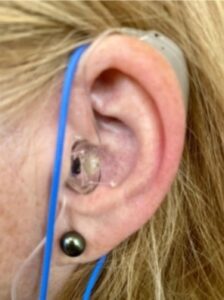
REM is easy, quick and painless procedure. During REM, an audiologist will feed your hearing test into a special software, which calculates the volume of the sounds your ear needs to hear optimally across the speech frequency range. And then they’ll place a microphone tube in your ear to understand how much sound is present in your ear with the hearing device in place. Once we know how much sound is needed and how much is there, we can match the two.
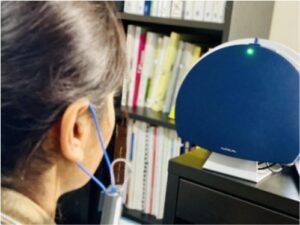
This is a great starting point for your hearing improvement journey. We build the fine-tuning on top of that in the ongoing days and weeks to provide you with the best hearing possible for your situation.
Without REM, programming is essentially guesswork.
If your hearing aids are set to “average ear” values, they are not truly customised for you.
You should expect and demand REM as part of professional hearing care.
✔ Ongoing Fine-Tuning & Follow-Up
Hearing needs change over time and across environments. Regular follow-ups allow adjustments that significantly improve long-term outcomes.
Equally important is easy access to your audiologist for ongoing support. In our practice, most clients are reviewed every 3–4 months to ensure optimal performance.
✔ Optimising the Functioning of Hearing Devices Further
Modern hearing aids are like microcomputers with enormous computing power. This power can be used for automatically processing your environment so that it works perfectly well in quiet and noise. For this, an experienced audiologist will work with your lifestyle to be able to adjust the devices beyond the volume adjustment and make you hear better in most situations.
There are numerous software parameters that must be carefully balanced based on how you hear in different environments. This is a process, not a one-time event.
✔And more….
When we do your hearing assessment, it includes both tones and speech tests. Speech tests include speech sounds which are distorted like in the real environment (e.g. someone speaking with an accent) or the ones presented with some noise in the background. All this builds a good base for post hearing technology prescription training. Depending on your results, you may be prescribed some auditory exercises that can further enhance your speech understanding in short to medium term. There is also a range of simple communication strategies which you can use to manipulate your environment to get maximum out of your hearing technology.
The Best Results Come from Working Together
Successful hearing care is a partnership between technology, professional expertise, and your brain’s ability to adapt.
Even the most advanced hearing aid needs:
- Expert fitting
- Objective verification
- Ongoing fine-tuning
- Sometimes auditory training and communication strategies to help the brain relearn sound patterns
When a hearing aid feels like it “isn’t working,” the issue is usually not the device itself — but how sound is processed, programmed, and supported over time.
By working closely with an experienced audiologist, you can maximise your hearing potential and make conversations clearer, more comfortable, and far less tiring.