




If you are experiencing ear pain, it can be worrying and uncomfortable, whether it started suddenly or developed gradually over several days. A mild earache may disappear on its own in a few days, but a persistent, severe earache or a painful ear can sometimes indicate a serious problem that may require medical attention.
So, the basic causes are common conditions such as infections, pressure changes, earwax build-up, or minor irritation. However, some symptoms can indicate a serious issue that should not be ignored.
What Is Aching Ear Pain?
Aching ear pain, also known as otalgia, refers to discomfort in or around the ear. The pain may affect one or both ears and can range from a mild irritation to severe discomfort. However, adults and children may experience ear pain differently, and the root cause is not always located inside the ear.
In some cases, ear pain develops gradually over several days, while in others it suddenly appears. Aching ears may also occur due to reduced hearing, ringing in the ears (tinnitus), a blocked sensation, fluid in the ear, or dizziness.
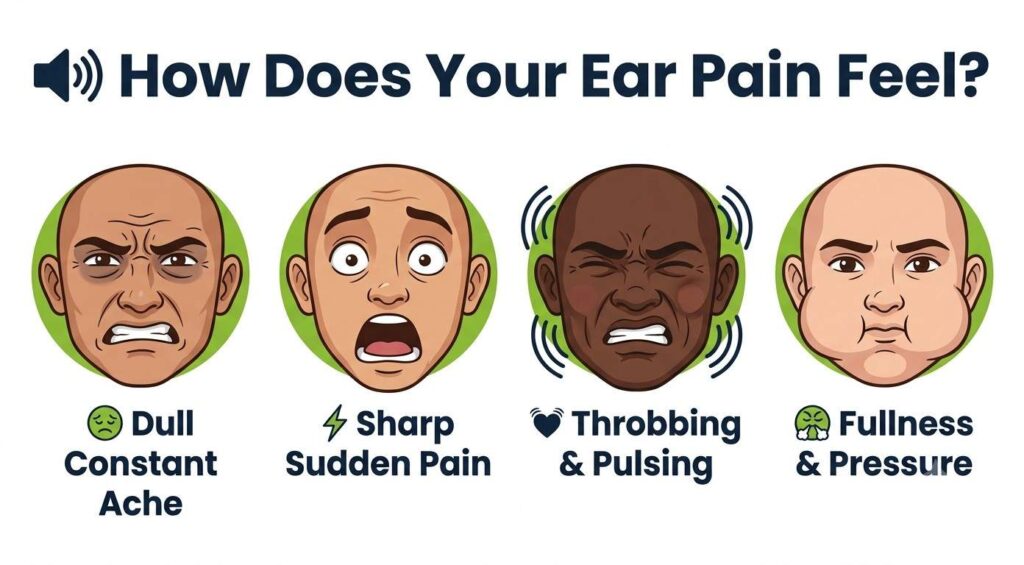
People commonly describe ear pain as:
- A dull, constant ache.
- A sharp, sudden pain.
- A throbbing or pulsing sensation.
- A feeling of fullness or pressure inside the ear.
Understanding the type of pain you’re going through will help the doctor determine the most common cause and recommend an appropriate treatment.
What Are the Common Causes of Ear Pain?
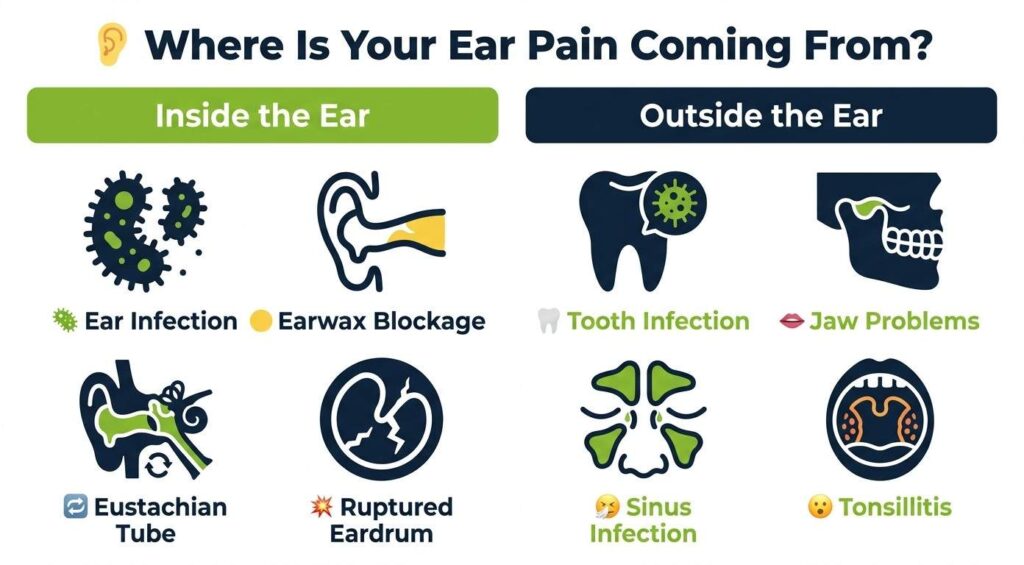
There are many possible causes of ear pain. Some problems occur inside the ear, while others are caused by conditions outside the ear that refer pain to the ear. Identifying the root of the discomfort is the first step towards treatment.
Causes Inside the Ear
Most conditions directly affect the eardrum, ear canal, or middle ear.
- Ear infections: Middle ear infections are common in children and often follow a cold. Outer ear infections, also called swimmer’s ear, can occur when bacteria or fungi invade the ear canal. Both of these conditions can cause significant aching pain in the ear, swelling, tenderness, and temporary hearing loss.
- Earwax Build-up: Earwax helps in protecting the ear by trapping dirt and bacteria. However, excessive wax can also block the ear canal, which creates pressure, tinnitus, discomfort, reduced hearing, and dizziness.
- Eustachian Tube Dysfunction: The Eustachian tube helps equalise pressure between the middle ear and the outside environment. During colds, air travel, allergies, or sinus infections, the tube can become blocked, leading to pressure, popping sensations, muffled hearing, and earache.
- Perforated (Ruptured) Eardrum: A tear in the eardrum may occur due to an infection, injury, sudden pressure changes, or exposure to loud noises. The symptoms of a perforated eardrum generally include sudden pain, hearing loss, ringing in the ears, or discharge.
Also read: Fungal infection of Ear
Causes Outside the Ear (Referred Pain)
Not all ear pain develops inside the ear itself; some pain is caused by other body parts such as:
- Toothache or Dental Infection
- If you have infected teeth or impacted wisdom teeth, they frequently create pain that radiates into the ear.
- Jaw Problems (Temporomandibular Joint Disorders)
- The jaw joint is very close to the ear. Teeth grinding, jaw arthritis, etc can produce aching that can feel like an ear problem.
- Sore Throat or Tonsillitis
- If you have a sore throat or tonsillitis, it can cause pain in your ear.
- Sinus Infection
- A sinus infection increases pressure around the face and ears, leading to congestion, headaches, facial pain, and ear pain.
There are many different causes of ear infection or ear pain.
Aching Pain Behind Ear: What It Could Mean
Aching pain behind the ear can be worrying because the discomfort is located around the bone rather than just inside the ear. There are many causes that are harmless and temporary, but pain in the area should not be ignored when it becomes severe or is accompanied by other symptoms.
Some possible causes include:
- Swollen lymph nodes- It is due to a cold, throat infection, or another illness.
- Muscle strain or tension, particularly in the neck and shoulders, which can radiate pain behind the ear.
- Mastoiditis, a rare but serious infection of the mastoid bone located behind the ear. This usually develops as a complication of an untreated middle ear infection.
- Skin infections or inflamed cysts near the ear.
In many cases, the discomfort improves when the underlying condition is treated. However, if there is pain behind the ear and swelling, redness, fever, or discharge from the ear, you should see a doctor for advice.
Also read related article: Swollen Ear: Types, Signs, Causes, Reasons & Treatments
Ear Ache with Shooting Pain: What It Could Mean
If you are experiencing earache shooting pains, you may feel stubborn. Unlike other aches, shooting pain is sudden, sharp, and intense. It may last only a few seconds or can sometimes continue in repeated bursts.
Possible causes of this pain are:
- Acute middle ear infection, where inflammation and pressure build up behind the eardrum.
- Nerve irritation (neuralgia), causing sudden, electric shock-like pain.
- Dental problems, including tooth infections or impacted wisdom teeth.
- Jaw disorders (TMJ) that radiate pain towards the ear.
- Rapid pressure changes during flying, diving, or travelling through mountains.
The exact cause depends on the other symptoms that are present. If shooting pain occurs with hearing loss, dizziness, fever, or fluid coming from the ear, then doctor’s advice is very important.
Even when symptoms appear mild, it is worth monitoring them closely. Persistent or recurring sharp pain should always be evaluated by a healthcare professional.
When Is Your Ear Sore?
If your ear is sore, the discomfort can affect the outer ear, ear canal, or surrounding skin rather than the deeper structures of the ear.
Common causes in everyday life include:
- Sleeping on one side for long periods
- Earrings or newly pierced ears causing irritation
- Sunburn affecting the outer ear
- Minor cuts, insect bites, or skin infections
- Allergic reactions to jewellery or hair products
- Pressure from headphones or hearing protection
A sore in the outer ear generally improves within a few days. However, if swelling increases, the ear becomes very tender, or signs of infection develop, you should seek medical advice.
Pain Inside My Ear or a Hurting Ear
What Does It Mean?
The ear canal, middle ear, or deeper ear structures can cause ear pain.
A hurting ear can be caused by:
- Middle ear infections
- Outer ear infections
- Earwax blockage
- Pressure changes
- A perforated eardrum
- Eustachian tube dysfunction
The common symptoms include:
- Reduced hearing
- Ringing in the ears (tinnitus)
- Ear discharge
- Dizziness or balance problems
- A feeling of fullness or blocked ears
Severe Ear Pain
Warning Signs You Should Never Ignore
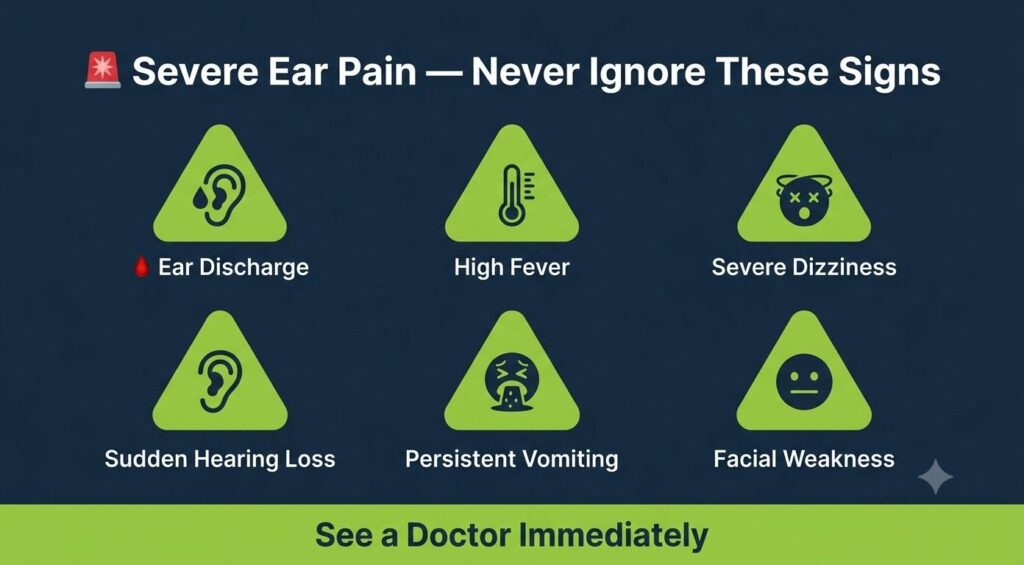
Ear pain accompanied by certain symptoms may require urgent medical attention.
- Sudden hearing loss
- Blood, pus, or fluid leaking from the ear
- High fever with ear pain
- Severe dizziness or difficulty maintaining balance
- Facial weakness or drooping
- Swelling, redness, or tenderness behind the ear
- Pain that becomes rapidly worse
- A head injury followed by ear pain or discharge
- Persistent vomiting alongside ear pain
These symptoms could indicate a serious infection, eardrum damage, or another condition requiring immediate treatment.
When Should You See a Doctor?
Most ear pain improves on its own within two or three days. But if the symptoms are severe and the pain persists for a week, you should see a doctor.
- Ear pain lasts longer than 48-72 hours.
- Your symptoms continue getting worse.
- You develop hearing loss.
- Ear pain returns repeatedly.
- A child under two years old has ear pain.
- You notice discharge from the ear.
- Over-the-counter pain relief is not helping.
- You experience repeated ear infections.
How Audiologists Diagnose Aching Ear Pain
It is very important to determine the exact cause of aching ear pain, as many conditions share similar symptoms.
Diagnostic Step | What It Checks |
Case history | Symptoms, duration, triggers |
Otoscopy | Visual check of ear canal and eardrum |
Tympanometry | Eardrum movement and middle ear pressure |
Hearing test | Whether pain has affected hearing |
- Case history- Your doctor will ask you some questions about the type of pain you’re facing. They’ll want to know whether the pain is dull, throbbing, sharp, or constant, and how long you’ve had the symptoms.
- Otoscopy- An otoscope helps a doctor to examine the ear canal and eardrum safely and comfortably.
- Tympanometry- If middle ear pressure or fluid is suspected, tympanometry may be recommended.
- Hearing test- If you’ve noticed reduced hearing, muffled sounds, or tinnitus alongside ear pain, a hearing test can determine whether your hearing has been affected.
How to Prevent Aching Ear Pain

It is impossible to prevent every ear problem; adopting healthy ear care habits can significantly reduce your risk of developing aching ear pain.
Simple preventive measures include:
- Avoid putting cotton buds or other objects into your ear canal.
- Dry your ears gently after swimming or showering.
- Protect your ears during take-off and landing by swallowing, yawning, or chewing gum.
- Treat colds, allergies, and sinus infections promptly to reduce pressure changes.
- Wear ear protection when swimming if you’re prone to swimmer’s ear.
- Have excessive earwax removed professionally instead of attempting home removal.
Conclusion
Most cases of ear pain are caused by common conditions such as infections, earwax buildup, or pressure changes, and often improve with appropriate care. However, persistent symptoms, worsening pain, or a hurting ear accompanied by hearing loss, fever, dizziness, or discharge should never be ignored.
Listening to your body and seeking professional advice when something doesn’t feel right is the safest approach. Early assessment can identify the cause of your symptoms and help prevent complications.
If you’re experiencing ongoing ear pain, hearing changes, or blocked ears, the qualified audiologists at Audiology Planet can assess your symptoms, recommend appropriate treatment, and refer you for further care if necessary.
Also read related article: Why does my Ear Hurt

Consultant Audiologist
Dr. Jay Jindal
Dr. Jay Jindal, Consultant Audiologist, has 20+ years NHS and private experience.