



Expert evaluation and intervention for auditory processing difficulties in children and adults.
Audiology Planet Auditory Processing
Expert evaluation and intervention for auditory processing difficulties in children and adults.
Exclusive Independent Ear & Hearing Clinic, Providing Exceptional Care to All Ages.
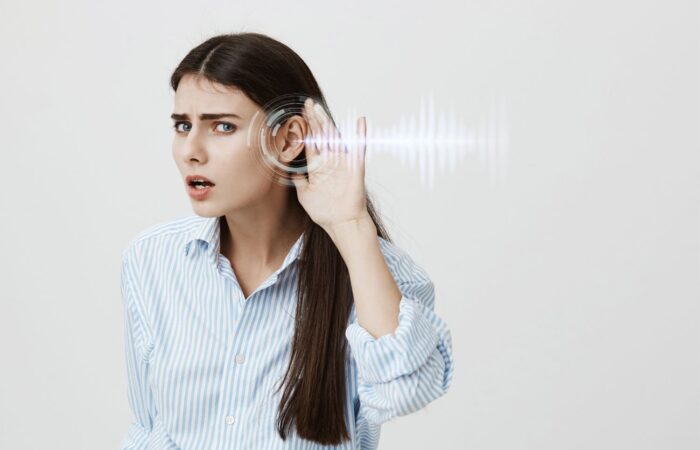
APD is a hearing issue that occurs despite having completely normal ears. It is a condition in which your brain can’t understand and interpret auditory signals as it should. In simple words, you can hear sounds but might have trouble listening in challenging situations such as a noisy environment, someone speaking from a distance, someone speaking very softly, etc.
APD can happen to children and adults. It can also affect a person’s memory. So a person having APD may have an issue with remembering some complex information. The condition may co-exist or, in some cases, even be misdiagnosed as dyslexia, apraxia or language comprehension issues.
Standard hearing tests (such as pure tone audiometry and tympanometry) are tests for checking how well your ears are hearing, not to determine APD. Therefore, a specialised assessment is required by a highly qualified audiologist to diagnose APD. A specialised APD test assesses how well your brain is breaking up the information received from the ears and analysing it to interpret the sounds and speech.
At Audiology Planet, we offer a comprehensive service for APD assessment and management using the latest techniques and procedures for all age groups.

APD Diagnostic Service:
We start with a comprehensive medical/clinical/social/academic history. We don’t have an APD screening service per se as we dont feel screening can address the listening issues in a way that’s needed. It
So, we only offer two options for appointments :-
- Paediatric hearing assessment (0-18 years) Or
- APD diagnostic assessment

Paediatric assessment
Everyone of any age coming to our clinic tends to have the below:
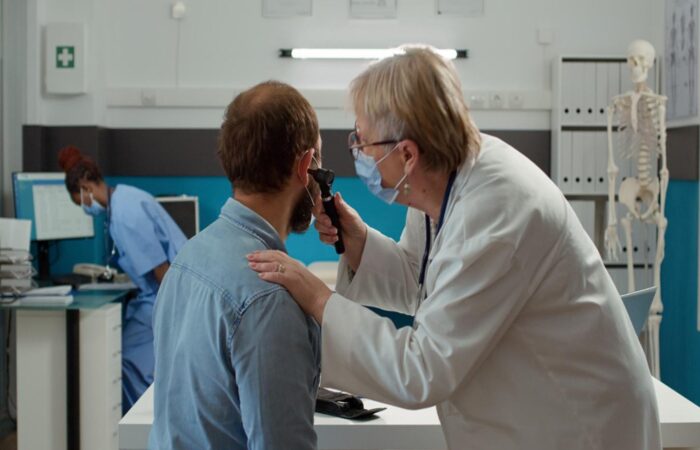
- Ear examination
- Tympanometry
- Acoustic reflexes- both ipsi and contra
- Otoacoustic emissions
For babies, we have auditory brainstem test available.
For pre-schoolers we do visual reinforcement audiometry and speech tests
For school age children- we tend to include puretone/play audiometry and speech testing including speech in noise tests as standard assessment
More details are available here: Paediatric Audiology
What are auditory processing disorders?
Auditory processing disorder (APD) is a condition that makes it harder to process sounds and language. You hear words, but it might take your brain a bit longer to understand them. You may also have trouble focusing in an environment with lots of background noise. However, you don’t have hearing loss.
APD is usually discovered in children and adults. However, there’s no cure for APD; audiologists have treatments that can help in managing your symptoms.
How do we hear?
Most of us can hear well, so we do not give much thought to how complex the process of hearing and understanding is. It starts with a series of mechanical actions inside the ear when a sound strikes the eardrum. The ear converts the mechanical sounds into electrical waves that are taken to the brain via the hearing nerve. The brain helps us understand the meaning of the sound based on the information stored in the memory.
What is audit processing?
The auditory system allows us to listen to sounds, words, and sentences, and our brain works together with our ears to process and work out the meaning of these sounds. It is vital that our ears and brain work together and coordinate fully to achieve effective processing of these sounds.
Symptoms and Causes
What are the symptoms of auditory processing disorders?
Here are symptoms of auditory processing disorders:
- Following verbal directions
- Reading, spelling and writing.
- Understanding rapid speech
- Having long conversations or conversations in loud environments
- Responding immediately during conversations.
What are the auditory processing disorder causes?
Auditory processing disorder can be caused by many different things, including:
- Frequent ear infections
- Head injuries
- Low birth weight or premature birth.
- Genetics
- Neurodivergent conditions like ADHD or autism spectrum disorder.
- Central nervous system disorders like stroke, epilepsy, and multiple sclerosis (MS).
How is auditory processing disorder diagnosed?
Your healthcare provider will need to run some tests to diagnose auditory processing disorder. Here are some tests:
- Language tests to rule out language disorders.
- Hearing tests to rule out hearing loss.
- Psychological tests to check for ADHD or other similar conditions
- Auditory processing tests measure your brain’s ability to process sounds.
Most of the tests of APD require a child to be at least 7 or 8 years old because the variability in brain function is so marked in younger children that test interpretation may not be possible.
For APD assessment, over and above the pediatric assessment, we generally use some of the tests below:
Random Gap Detection
Pitch Pattern
Dichotic Digits
Speech in noise test
Time Compressed Speech
Auditory Figure Ground
Filtered Words
Phoneme Synthesis
Staggered Spondaic Word.
Sometimes we use a phoneme synthesis test, particularly when there is concern about a speech disorder. Having additional knowledge of speech disorders helps extremely well.
How can we recognize the need for specialist APD testing?
The following questions should be asked of the students.
Is the child easily distracted or unusually bothered by loud/sudden noises?
- Are distracting environments upsetting the child? (background noise)
- Does the child find it easier to cope in quieter settings?
- Does the child have difficulty following oral instructions/directions, whether simple or complicated? (needing to hear only one direction at a time)
- Does the child have reading, spelling, writing, or other speech-language difficulties?
- Is abstract information difficult for the child to comprehend? Are verbal maths problems difficult? Is the child disorganized and forgetful?
- Are conversations hard for the child to follow? Does the child take a longer time to process information?
How can we help children with APD?
Many strategies can be applied at school and at home to ease some of the difficulties associated with APD. Some of which are outlined below:
- By acknowledging that the child’s auditory difficulties are real and not within the child’s control. It helps in boosting self-confidence by giving students positive feedback.
- Reduce background noise at home/ school– Background noise can distract from listening tasks. Make the child sit in front of the classroom, away from windows, so the teacher is most likely to notice any confusion or lack of comprehension.
- Review the first few items of the task handout to help keep students focused. Watch for signs of decreased concentration. Intervene with questions to keep students focused.
What can I expect if I have an auditory processing disorder?
APD affects each person differently. Self-care starts with understanding how APD is impacting you and your symptoms.
For children and adults, APD’s treatment can help manage the symptoms. And, children who are suffering from APD may notice improvement in their symptoms as they grow older.
Duration of an Appointment at Audiology Planet
The appointment will be for 90-120 minutes. We encourage parents/clients to book appointments first in the morning, as we find it works better
Top Tip:
Try not to listen to too much on your appointment day, especially via headphones. If travelling to us from a distance longer than 20 minutes, do not listen to high-volume music. Don’t do a heavy mental task on the day of assessment. However, some slow, soothing, relaxing music is fine.
We tend to arrange the tests so that the more time-consuming tasks are done first, then objective tests like OAE, which gives a little mental break while the computer’s working its magic on the ears. You can ask us for a 5-minute break in between the tasks. If we find that the person is struggling with listening effort or the results are not good, then you might be called again for a second appointment to either complete or repeat the tests.
We are happy to see both the insured and self-funded patients. If you have any queries or comments, please feel free to contact us.
Key Points
APD is an auditory disorder that is not the result of higher-order, more global deficit such as autism, intellectual developmental disorder, attention deficits, or similar impairments.
Not all learning, language, and communication deficits are due to APD.
No matter how many symptoms of APD a child has, only careful and accurate diagnosis can determine if APD is, indeed, present.
Although a multidisciplinary team approach is important in fully understanding the cluster of problems associated with APD, the diagnosis of APD can only be made by an audiologist.
Treatment of APD is highly individualized. There is no one treatment approach that is appropriate for all children with APD.
Some implications of information that we have on APD:
APD is for life, as with other invisible disabilities.
APD cannot be cured but with the correct diagnosis, remediation and strategies, APD sufferers can learn to cope with their disability with the help of those around them.
Those who have APD may find groups of more than 3 or 4 people threatening as they unable not process multiple auditory (verbal) input.
APDs find following social interaction difficult especially with new people, and those with good adversarial debating skills.
Those who have APD may have problems filling in textual forms Problems processing what the meaning of the questions mean will in turn cause problems when trying to process an answer.
Those who have APD who have a high IQ are more difficult to diagnose, as they are very good at developing their own coping strategies.
APDs really find life difficult to cope with when leaving the relative safe confines of the education system if they have not come to terms with their disability and how best to cope with it. They can become very isolated.
REFERENCES:
2015. Central auditory processing disorder (CAPD) tests in a school-age hearing screening programme – analysis of 76,429 children. Skarzynski PH, Wlodarczyk AW et al. Annals of Agricultural and Environmental Medicine 2015, Vol 22, No 1, 90–95. Full text article of available at: http://aaem.pl/fulltxt.php?ICID=1141375 retrieved in Mar 2015
2015. Children and auditory processing disorder (APD) – information and research update. Retrieved August 2015. http://www.nhs.uk/ipgmedia/national/deafness%20research%20uk/assets/childrenandauditoryprocessingdisorder(apd)-%E2%80%93informationandresearchupdate.pdf
2012. Children’s Hospital Medical Center Language. Health Topics. Language/auditory processing disorder. Retrieved August 2015. http://www.cincinnatichildrens.org/health/a/auditory-processing/
2011. British Society of Audiologists (2011). Position statement on Auditory Processing Disorders March 2011. Retrieved in July 2015 http://www.thebsa.org.uk/wpcontent/uploads/2014/04/BSA_APD_PositionPaper_31March11_FINAL.pdf
2010. American Academy of Audiology (2010). Diagnosis, Treatment and Management of Children and Adults with Central Auditory Processing Disorder. Accesses in Jan 2015
http://audiologyweb.s3.amazonaws.com/migated/CAPD%20Guidelines%2082010.pdf_539952af956c7 9.73897613.pdf
2001. Florida Department of Education. Technical Assistance Paper 10967: Appendix C. Suggestions for successful management of students with central auditory processing disorder (CAPD): Tips for the teacher. Retrieved September 2012. http://shs.asu.edu/files/ASU-SHS-Clinic_CAPD-TipsForTeachers.pdf Cincinnati