






Expert Tinnitus Treatment & Management in Kent, UK
Noval approach to comprehensive assessment and treatment for tinnitus- including counselling and sound therapy.
Exclusive Independent Ear & Hearing Clinic, Providing Exceptional Care to All Ages.
You cannot live with tinnitus, as it can be challenging and frustrating. We provide you with effective support. At our clinic, we provide evidence-based tinnitus treatment and UK services, helping patients by reducing the impact of tinnitus through personalized care, counseling, and sound-based solutions.
A lot of people are experiencing this disease, which is often described as ringing, buzzing, or whistling sounds heard in the ear without any source. Tinnitus can commonly lead to hearing loss. This can also occur due to noise exposure, ear conditions, stress, or any other health factors.
Our approach to tinnitus management in Kent focuses on identifying why it happened, reducing disease-related stress, and improving quality of life through treatment plans.
What is Tinnitus?
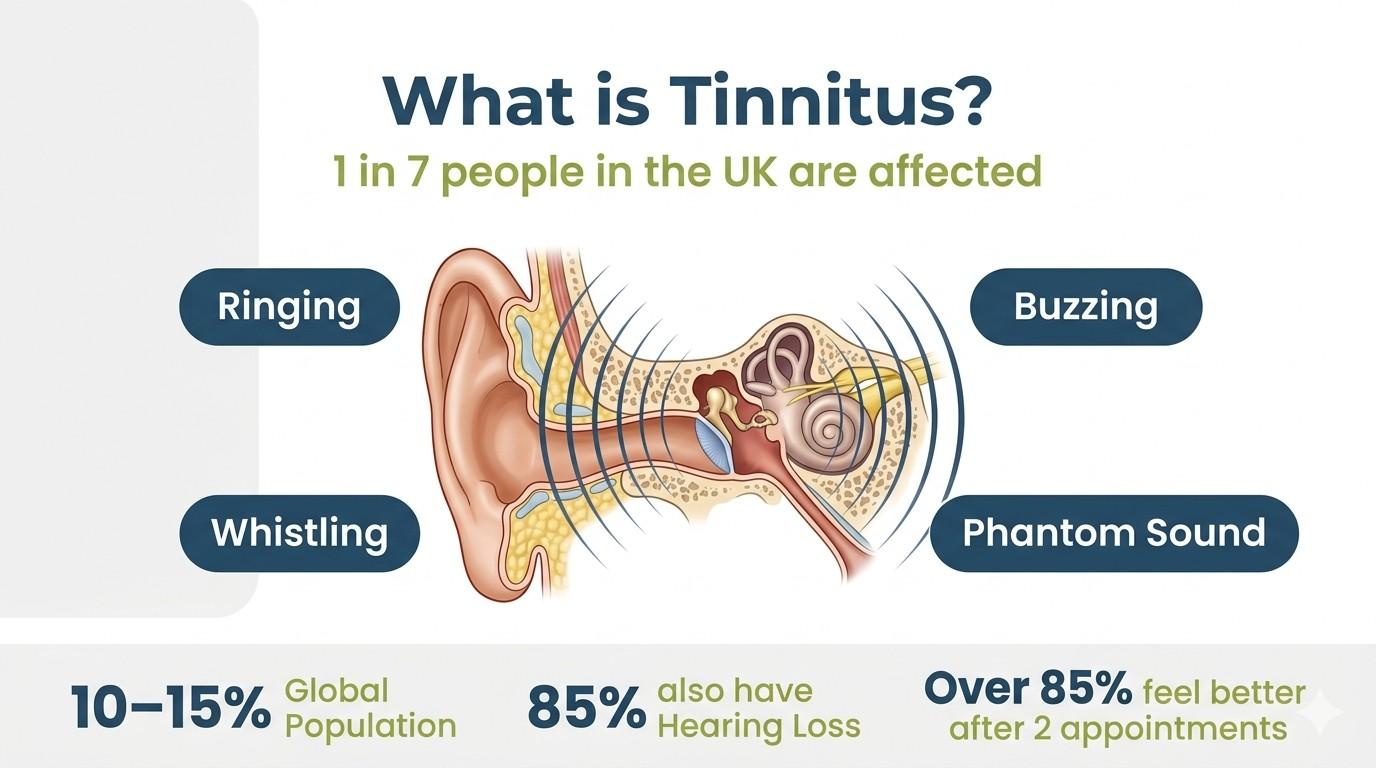
Tinnitus is the perception of sound in the absence of external sound. This phantom noise can range from ringing, whistling, or buzzing to more complex sounds. It is often associated with hearing loss, but can also be caused by other factors such as exposure to loud noises, certain medications, and stress. Tinnitus can be temporary or permanent, and while there is no cure, there are various treatments that can help manage symptoms.
It is estimated that 10-15% of the world’s population has tinnitus. 85% people with tinnitus will also have hearing loss. Some people start to experience tinnitus after a temporary hearing loss due to noise exposure, earwax/ear infection, etc. About 1 in 7 people in the UK have tinnitus. About a fourth of people who experience tinnitus are actually bothered by it. Fortunately, a vast majority of people who have tinnitus do not feel stressed about it. There is a range of management techniques that a healthcare professional can discuss with you, depending on your individual circumstances. There is help available for everyone. In our experience, over 85% of those who seek help for tinnitus feel better after two appointments.
What causes Tinnitus?
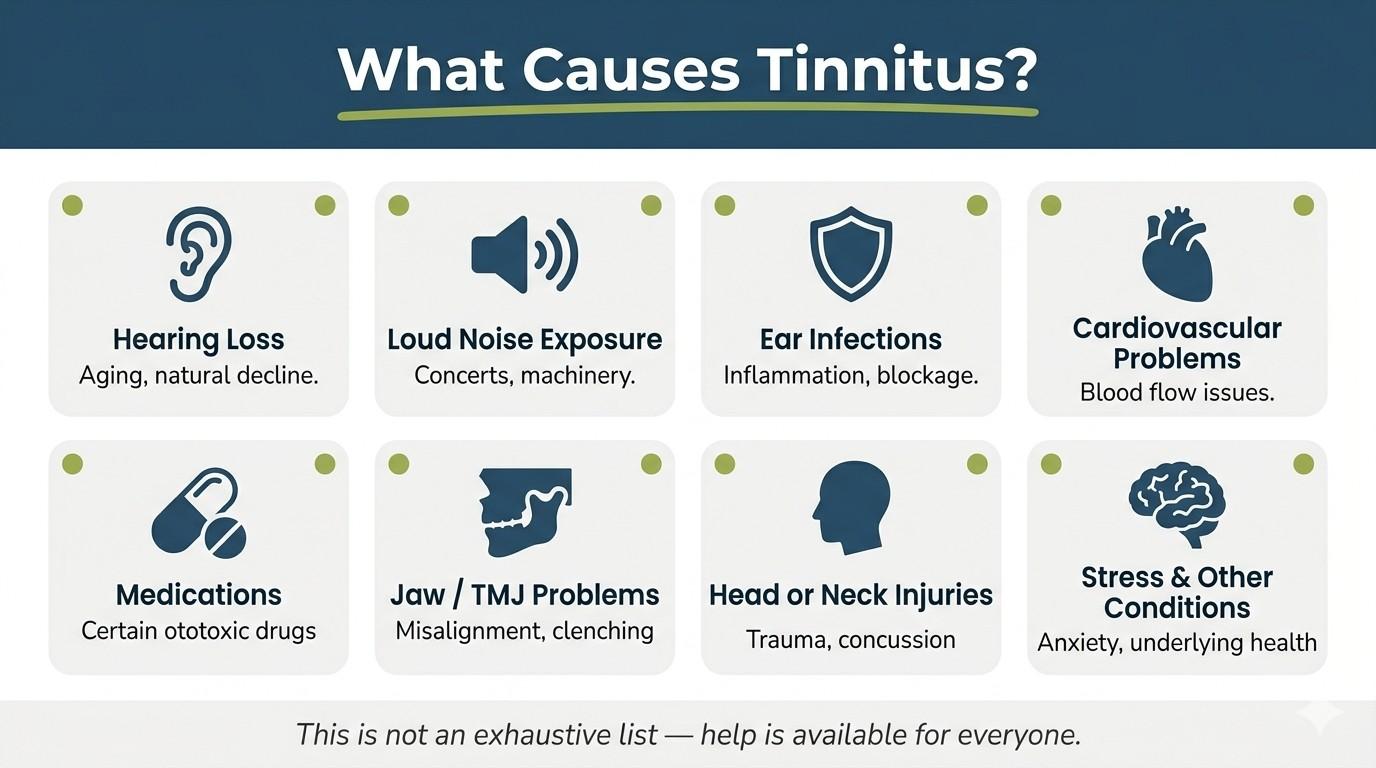
Tinnitus can be caused by various factors, including:
- Hearing loss: One of the most common causes of tinnitus is temporary or permanent hearing loss.
- Exposure to loud noise: Prolonged or sudden exposure to loud noise can cause permanent damage to the ears and lead to tinnitus. Interestingly, sometimes noise does not cause hearing loss on an audiogram and only affects the part of the Inner ear that helps us understand speech. It is called a hidden hearing loss.
- Ear infections: Middle ear infections can cause inflammation that can lead to tinnitus.
- Cardiovascular problems: Tinnitus can also be a symptom of certain cardiovascular problems, such as high blood pressure or atherosclerosis.
- Medications: Some medications, including aspirin and certain antibiotics, can cause tinnitus as a side effect.
- Jaw problems: Tinnitus can also be caused by problems with the jaw, such as temporomandibular joint (TMJ) disorder.
- Other health conditions: Tinnitus can also be a symptom of other health conditions, such as autoimmune disorder, cochlear migraine, diabetes, Meniere’s disease, and thyroid problems.
- Head or neck injuries: Injuries on the head and neck can also, in some cases, cause you Tinnitus.
- Dental issues: Tinnitus can also be caused by a problem in the jaw.
This is not an exhaustive list. It is important to note that in some cases, the exact cause of tinnitus may not be determined, but help is available.
How is tinnitus managed?
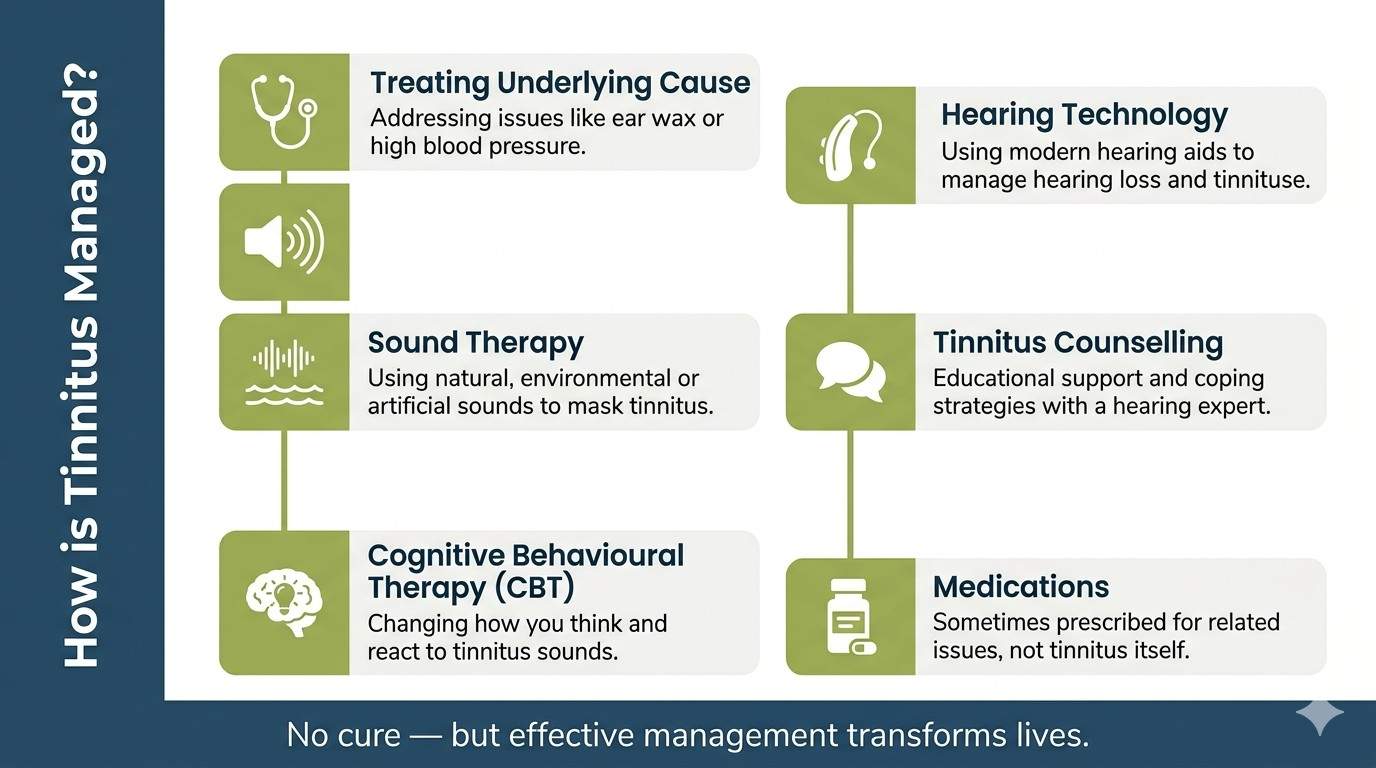
Tinnitus treatment depends on the underlying cause, but may include the following:
- Treating the underlying cause: If tinnitus is caused by a treatable condition, such as an ear infection or medication side effect, treating the underlying issue may alleviate tinnitus symptoms.
- Hearing technology: If tinnitus is caused by hearing loss, a hearing device can help amplify external sounds, reducing the perception of tinnitus.
- Sound therapy: Listening to soothing sounds, such as sea-shore noise, can help with tinnitus and provide relief.
- Tinnitus advice and information: It involves retraining the brain to tune out tinnitus by using sound therapy, counselling, and other tools specific to your situation.
- Cognitive behavioural therapy (CBT): CBT can help individuals with tinnitus manage their stress and anxiety related to the condition.
- Medications: While there is no medication specifically designed to treat tinnitus, certain medications, such as anti-anxiety drugs or antidepressants, may be prescribed to manage related symptoms.
It’s important to note that there is no cure for tinnitus. The treatment is directed at managing the condition and its effect on one’s life. The effectiveness of treatment varies for everyone. A healthcare professional can help determine the best course of treatment based on the individual’s specific situation.
Can tinnitus be prevented?
Some causes of tinnitus aren’t preventable. But you can reduce the risk of hearing loss, which is one of the most common causes of tinnitus. You may need to protect your hearing if you:
- Exercise in the gym that plays loud music for motivation.
- Use firearms
- Attend concerts and movies with high noise.
- Work in construction sites or in a factory where you are exposed to machines.
- Using earbuds and headphones at high volume when you listen to podcasts.
- Smoke cigarettes or cigars (smoking can damage your ears and cause hearing loss and tinnitus).
Why is there no cure for tinnitus?
Currently, there’s no cure for tinnitus in the world.
- It is a symptom, not a disease.
- It can have many other causes.
- Every person experiences this differently.
However, effective management can mainly reduce the symptoms and improve life.
Does the alternative treatment help with tinnitus?
Alternative treatments for tinnitus, such as herbal remedies or acupuncture, may provide some relief for some individuals with the condition. However, the effectiveness of alternative treatments for tinnitus has not been well-studied, and their effectiveness may vary from person to person.
While alternative treatments may provide relief for some individuals, it is important to keep in mind that there is currently no cure for tinnitus, and the most effective way to manage symptoms is through established treatment options, such as sound therapy, cognitive behavioral therapy, and medication.
How does hearing technology help with tinnitus?
The widely respected NICE guideline on tinnitus assessment and management—NG155—recommends that hearing care professionals must consider amplification devices for people with tinnitus who have a hearing loss, even if they do not have practical difficulties in conversations, etc. Hearing devices can help people with tinnitus in several ways:
- Amplifying sound: By amplifying external sounds, hearing devices can reduce the relative loudness of tinnitus, making it less noticeable.
- Masking sound: Hearing devices can also be equipped with tinnitus maskers, which are sounds specifically designed to distract the user from tinnitus.
- Improving hearing: For people with tinnitus and hearing loss, hearing devices can help improve hearing, which can have a positive impact on tinnitus symptoms.
- Improving communication: Hearing devices can improve communication, which can have a positive impact on social, emotional, and mental well-being, and in turn, reduce the impact of tinnitus.
Hearing devices are not a cure for tinnitus, but they can be effective for managing symptoms, especially for people who are suffering from hearing loss or tinnitus. Before using these hearing devices, it is important to consult a doctor who can help you and give you better advice.
When do you need to see someone for tinnitus advice and information?
- They can provide you with advice and information on managing your symptoms.
- They can evaluate your symptoms and determine the cause of your tinnitus.
- They can refer you to an audiologist or other specialists.
- It’s important to seek medical advice and information as soon as you start experiencing tinnitus symptoms.
- Early intervention and treatment can help you prevent the symptoms from becoming more severe.
- Your healthcare professional can also provide you with information on available treatments.
When do you need further medical investigations for tinnitus?
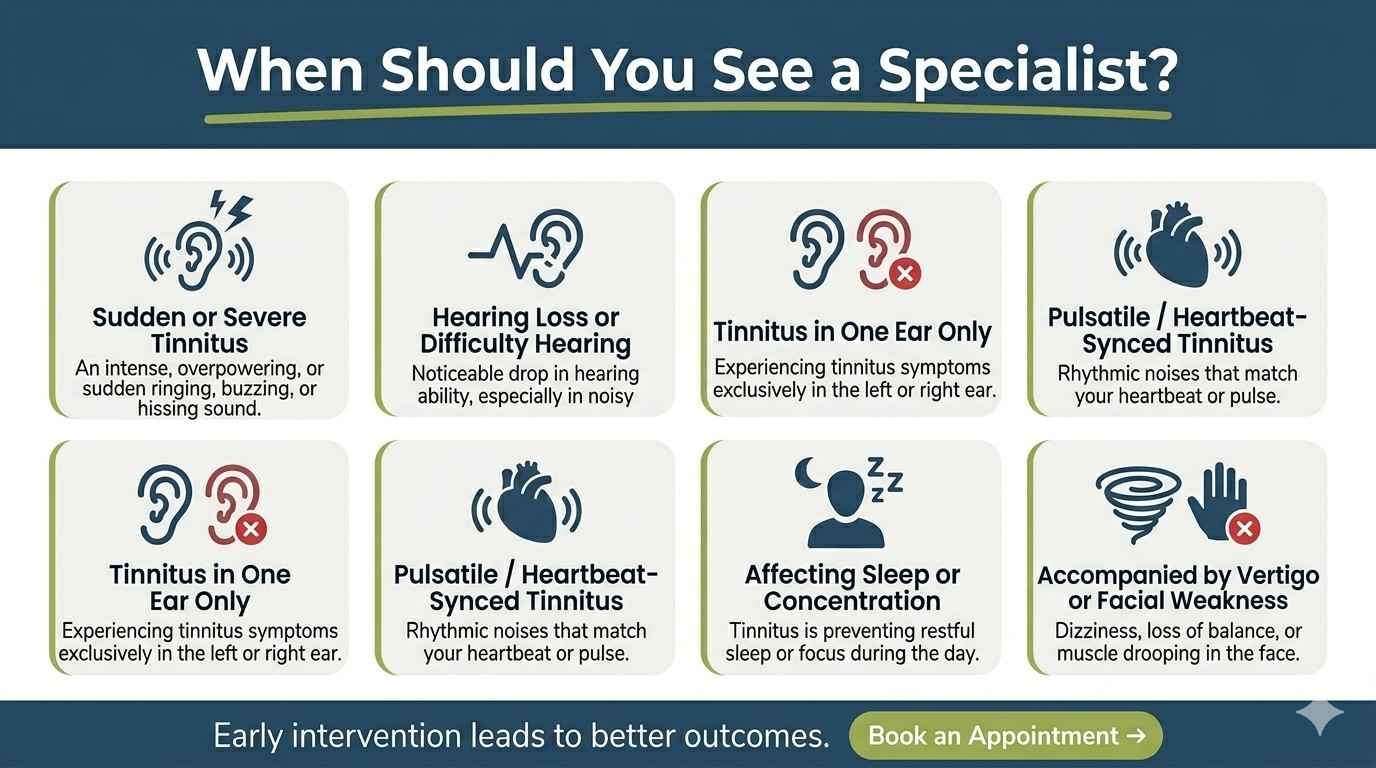
It’s recommended that you seek medical evaluation for tinnitus if:
- Your tinnitus is sudden or severe: Sudden onset of severe tinnitus may be a sign of an underlying medical condition, such as a rapid build-up of earwax or an inner ear infection, that requires prompt medical attention.
- You have hearing loss or difficulty hearing: Tinnitus can sometimes be accompanied by hearing loss, and if you’re having difficulty hearing, it’s important to have this evaluated by a healthcare professional.
- Unilateral tinnitus: If you have tinnitus only in one ear, it may require further investigations.
- Pulsatile tinnitus: If your tinnitus is pulsatile or in sync with your heartbeat, you will need a medical opinion.
- Your tinnitus is affecting your quality of life: If your tinnitus is making it difficult for you to sleep, concentrate, or participate in your daily activities, it’s important to seek medical evaluation to determine the best course of treatment.
- Your tinnitus is accompanied by other symptoms: Tinnitus can sometimes be a symptom of a more serious underlying medical condition, such as a benign tumor or Meniere’s disease. If you’re experiencing tinnitus in conjunction with other symptoms, such as vertigo, hearing loss, or facial weakness, it’s important to seek medical evaluation.
In general, if you’re experiencing tinnitus, it’s a good idea to see a healthcare professional to determine the cause of your symptoms and develop a management plan. Early intervention and treatment can help prevent your symptoms from becoming more severe and improve your quality of life.
Why Choose Audiology Planet?
How can we help?
Audiology Planet is a well-established, local, independent audiology clinic. We provide a full range of hearing and balance services to all age groups in our community. Our audiology clinics are in Sevenoaks, Kent, Surrey, and London. Our main clinics are in Sevenoaks (Springbank House) and Tunbridge Wells (Nuffield Clinic). We have abundant parking for our patients.
We provide holistic care, tailor-made for the individual circumstances of each and every patient. We use both the art and science of audiology to provide a need-based assessment and management. Our service is very well regarded by our patients and is run by one of the country’s leading audiology experts, Dr Jay Jindal. Jay has a doctorate degree in audiology and over 17 years of experience working in the NHS and private sectors. Jay has written research papers in several peer-reviewed medical journals. He is also often invited to teach at various national and international educational events on all things related to audiology.
Our Clinic Locations
Clinic Info.
- Sevenoaks Kent
- 07543664692
- Springbank Clinic: 13 Pembroke Road,Sevenoaks, Kent TN13 1XR
Clinic Info.
- Royal Tunbridge Wells, Kent
- 07543664692
- Audiology Planet, 42 Grosvenor Rd, Tunbridge Wells TN1 2AS
Book Appointment
Frequently Asked Questions
Sound enrichment is a form of tinnitus management that involves using external sounds to distract from or mask the perception of tinnitus. The goal of sound enrichment is to reduce the relative loudness of tinnitus and make it less noticeable. This can be achieved by providing a background of soothing or calming sounds, such as white noise, nature sounds, or music.
Sound enrichment can be delivered through various devices, including hearing technology, portable sound generators, or smartphone apps. The specific type of sound and delivery method will depend on individual preferences and the severity of tinnitus symptoms.
Sound enrichment is not a cure for tinnitus, but it can be an effective tool for managing symptoms, especially for people who have difficulty sleeping or concentrating due to their tinnitus. If you’re considering using sound enrichment for tinnitus, it’s important to consult with an audiologist, who can help determine the best type of sound and delivery method for your individual needs.
Earwax, also known as cerumen, is a natural substance produced by the glands in the ear canal that helps to lubricate the ear and protect it from dust, bacteria, and other foreign objects. Here are some tips for taking care of earwax:
- Avoid using cotton swabs or other objects to clean your ears: These objects can push earwax further into the ear canal and potentially cause damage.
- Use ear drops: Over-the-counter ear drops can help to soften and loosen earwax, making it easier to remove. Note that when the ear is completely blocked with earwax, the ear drops seldom help, and it needs to be removed by an expert.
- Consult your audiologist: If you have difficulty with earwax, or if you experience pain, discomfort, hearing loss, or ringing in the ear, it’s important to consult your audiologist. We can examine your ear and recommend appropriate treatment, such as earwax removal using suction or irrigation.
It’s important to avoid using cotton swabs or other objects to clean your ears, as this can push earwax further into the ear canal and potentially cause damage. If you have difficulty removing earwax or if you experience pain, discomfort, hearing loss, or ringing in the ear, it’s important to consult your audiologist for proper evaluation and treatment.
Tinnitus: assessment and management. NICE guideline [NG155]
https://www.nidcd.nih.gov/health/tinnitus. Accessed Dec. 22, 2020.
https://pmc.ncbi.nlm.nih.gov/articles/PMC6042678/
https://my.clevelandclinic.org/health/symptoms/14164-tinnitus




Consultant Audiologist
Dr. Jay Jindal
Dr. Jay Jindal, Consultant Audiologist, has 20+ years NHS and private experience.