





Introduction
Pulsatile tinnitus creates a thumping or swooshing noise in your head. The noise seems to keep time with your heartbeat. Pulsatile tinnitus may be a symptom of conditions that affect blood flow. Healthcare providers treat this symptom by identifying and treating the cause.
Unlike regular tinnitus, pulsatile tinnitus has a clear rhythm. It is often linked to changes in blood flow near the ear. The good news is that many causes are treatable once identified. Pulsatile tinnitus is a rare form of tinnitus.
It causes noise in your head that no one else hears. The noise may be a constant whooshing or thumping noise that happens in time with your heartbeat. This guide will help you explain the symptoms, causes, diagnosis, and available treatment options for pulsatile tinnitus.
What Is Pulsatile Tinnitus?
Pulsatile tinnitus is a rare form of tinnitus. It causes noise in your head that no one else hears. The noise may be a constant whooshing or thumping noise that happens in time with your heartbeat.
Pulsatile tinnitus is a form of inner ear tinnitus that creates a rhythmic sound in one or both ears. You’ll feel like the sound is matching your heartbeat or pulse. It often happens when blood flows near the vessels of the ear, and it becomes louder or more noticeable. Unlike regular tinnitus, doctors identify it as an underlying physical cause.
What Does Pulsatile Tinnitus Sound Like?
Pulsatile tinnitus sounds like a rhythmic swooshing or whooshing noise inside your head that often keeps pace with your pulse. In this case, blood runs faster than normal through the veins and arteries near your ears. So, people who have pulsatile tinnitus can hear their hearts beating.
Some people often describe this disease with a different name:
- Whooshing sounds which move in rhythm with your heartbeat
- Thumping noises inside your ear
- Pulsing ear sensations that come and go automatically.
- Rhythmic hissing sounds
- Heartbeat sounds can be heard clearly and easily while lying down.
- Clicking or grinding noises.
Is It the Same as Regular Tinnitus?
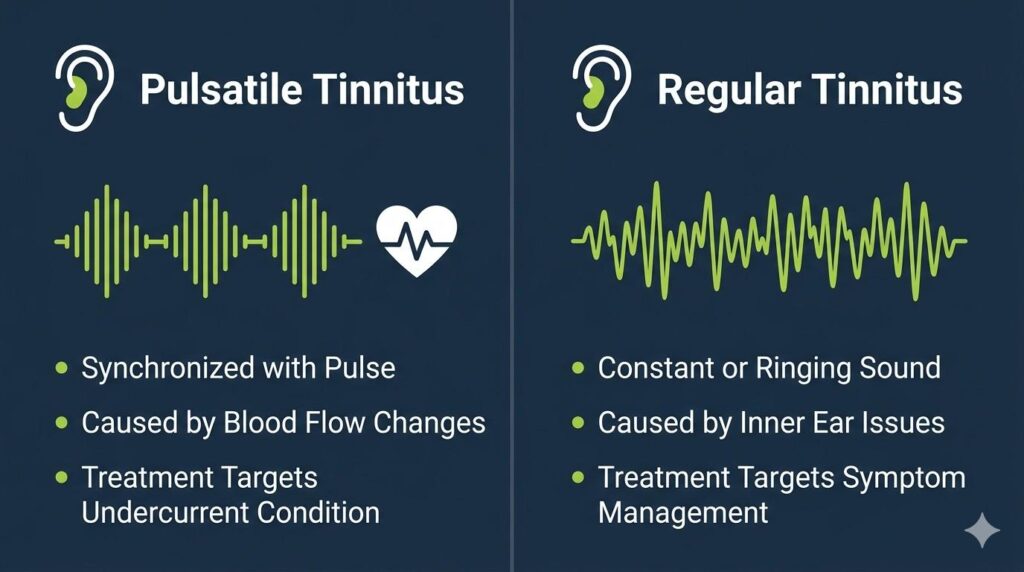
No, pulsatile tinnitus is not the same as regular tinnitus. Here’s why.
One of the most common differences is that pulsatile tinnitus causes a rhythmic sound that matches the heartbeat, whereas regular tinnitus causes constant or random noise. Pulsatile tinnitus is linked to blood flow or vascular changes. Regular tinnitus is often linked to hearing damage or nerve issues. Its cause is often unknown. Pulsatile tinnitus is usually identifiable.
Regular Tinnitus | Pulsatile Tinnitus |
Constant or random noise (ringing, buzzing) | Rhythmic sound that matches heartbeat |
Often linked to hearing damage or nerve issues | Linked to blood flow or vascular changes |
Cause often unknown (idiopathic) | Cause is usually identifiable |
Possible Causes:
What are the most common causes of pulsatile tinnitus?
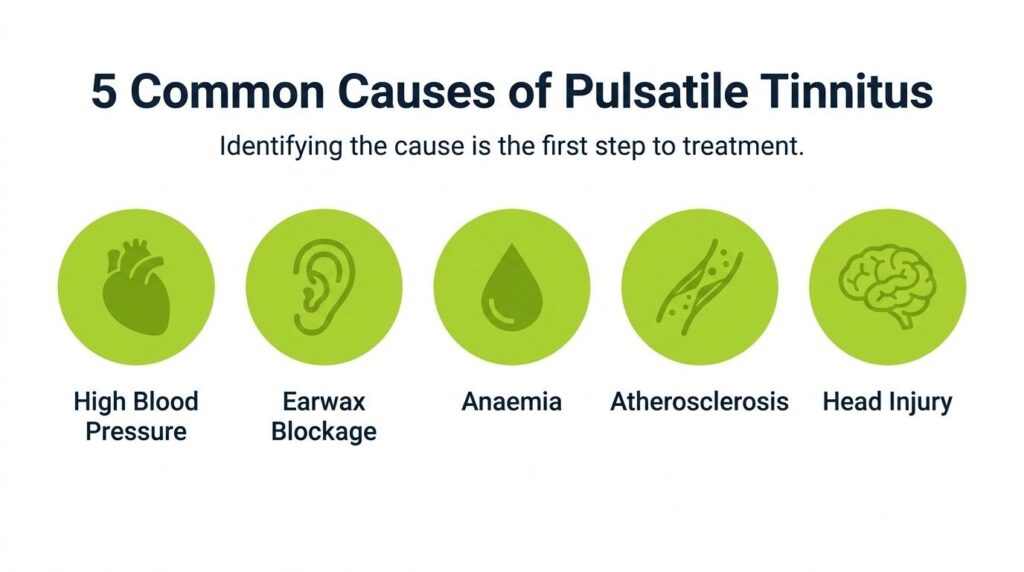
The most common cause found for pulsatile tinnitus is high blood pressure (hypertension). It puts extra pressure on blood vessels near the ear, which makes the blood flow louder and easier to hear. Another common cause seen is a change in blood flow.
Conditions that may cause pulsatile tinnitus include:
- Anaemia increases your blood flow and the amount of noise in your head.
- Arteriovenous malformations that create tangles of blood vessels near your ears.
- Atherosclerosis causes uneven blood flow, so your blood makes more noise as it flows through the arteries.
- High blood pressure that puts high pressure on your blood vessels.
- Head injuries that affect arteries and veins near your ear.
Can Ear Wax Cause Pulsatile Tinnitus?
Yes, earwax can cause pulsatile tinnitus and is common too. Earwax can block your ear canal if it builds up and can make internal body sounds easier to hear.
- Blockage of earwax can trap the sound inside your ear.
- Blood flow sound can be louder and also noticeable.
- Professional removal improves the symptoms more quickly than usual.
Less Common Causes:
- Sinus wall abnormalities
- Paget’s disease
- Glomus tumours
- Blood vessel narrowing.
Symptoms:
Main Symptoms of Pulsatile Tinnitus
Common symptoms include:
- Difficulty in sleeping
- Concentration problems
- Headaches or dizziness
- A rhythmic whooshing sound
- Heartbeat pulsing
- Thumping or hissing
- Symptoms worsening
Pulsatile Tinnitus in One Ear Only
Pulsatile tinnitus in one ear only is a very common problem noticed in people. Most people generally notice the sound more in either the left or right ear. One-sided symptoms could be caused by a blood vessel issue on that side of the head or neck.
The affected side can help the doctor to identify the cause. Doctors often investigate one-side of tinnitus carefully, and these symptoms are more common even than the bilateral symptoms.
Pulsatile Tinnitus in One Ear Only- Comes and Goes
Pulsatile tinnitus in one ear only comes and goes in many cases. This cause doesn’t need any treatment, as it goes away sometimes.
Symptoms can get worse during exercise, stress, illness, or high blood pressure. Even normal symptoms should not be ignored. You should keep in mind the symptoms that can help your doctor identify patterns and possible triggers.
Also read the related article: One Ear Hearing Problem (Unilateral Hearing Loss)
How Do I Know If I Have Pulsatile Tinnitus?
You can check whether you have pulsatile tinnitus by noticing the causes given above, or you can go through the following questions and can answer them yourself.
Questions you can ask yourself:
- Are you hearing a rhythmic sound in your ear?
- Does the sound match your pulse?
- Is the sound stronger at night?
- Does stress make it even worse?
- Do symptoms come and go?
- Do you experience headaches or dizziness?
If you answer any 2 or 3 questions with a “yes,” then you should definitely see a doctor.
How Is It Different from Regular Tinnitus?
- Regular tinnitus creates a ringing or buzzing sound in your ear.
- Pulsatile tinnitus follows a rhythm every day.
- Heartbeat timing is a major clue to pulsatile tinnitus.
- Blood flow issues usually explain pulsatile symptoms.
Diagnosis of Pulsatile Tinnitus
What Tests Will a Doctor Do?
- Are you hearing a rhythmic sound in your ear?
- Does the
- Physical examination of the ears, head, and neck
- Blood pressure
- Blood tests for anaemia or thyroid problems
- Hearing assessment
- MRI or MRA scans to examine blood vessels
- CT scans of the ear and skull
- sound match your pulse?
- Is the sound stronger at night?
- Does stress make it even worse?
- Do symptoms come and go?
- Do you experience headaches or dizziness?
If you answer any 2 or 3 questions with a “yes,” then you should definitely see a doctor.
What to Tell Your Doctor?
Make sure to make notes before your appointment. You should write all the symptoms you are facing; this will help you by not missing anything.
You should tell your doctor about:
- Which ear is affected
- When did you notice the symptoms?
- Whether these symptoms come and go
- Any dizziness or vision changes
- Blood pressure
- Current medications, if you are having any.
Care and Treatment:
Medical Treatments:
- High blood pressure
- Atherosclerosis
- Anaemia
- Earwax blockage
- Idiopathic intracranial hypertension
- AVMs
- Tumours
Purpose Treatment
- Reduce vessel pressure, blood pressure medication.
- Clear blockage, earwax removal
- Anaemia, Iron supplements
Self-Help at Home
You can also treat yourself or take precautionary measures before seeing a doctor.
- Use a white cloth while sleeping.
- Try to reduce caffeine and alcohol intake.
- Try yoga and meditation.
- Monitor blood pressure every day.
- Do not listen to loud music.
- Try CBT therapy.
Is Pulsatile Tinnitus Curable?
Yes, pulsatile tinnitus is curable and can be treated. For example, treating blood pressure, removing earwax, etc. In some cases, pulsatile tinnitus may continue for a long period of time but can be treated.
Is Pulsatile Tinnitus Dangerous?
No, pulsatile tinnitus is not always dangerous, but this disease should never be ignored.
When Is It Not Serious?
In some cases, causes are not always serious; sometimes they can be treated easily.
- Earwax blockage
- Stress or anxiety
- Pregnancy-related blood flow changes
- Temporary blood pressure increases
When It May Be More Serious
- Sudden pulsatile tinnitus in one ear
- Changes in vision
- Severe headaches
- High blood pressure
- Balance problems or dizziness
- Sudden hearing loss.
Also read related articles: Causes of Sudden Hearing Loss
When To Talk with a Doctor:
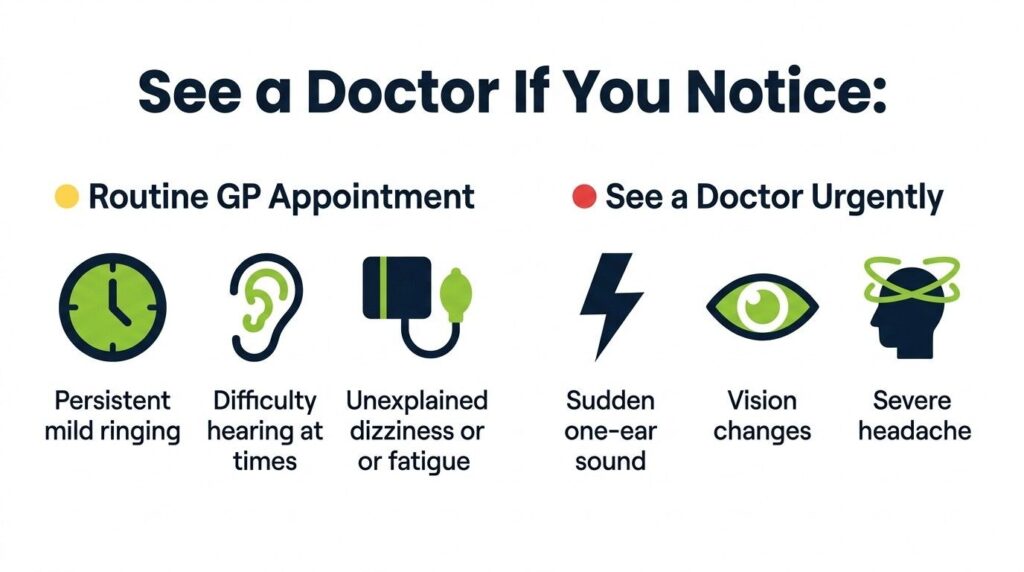
You should see a doctor when:
- If you suddenly hear a rhythmic swooshing sound in your head.
- If you hear sound in just one ear
- If you have a severe headache
- Balance problems or dizziness.
When to Book a Routine GP Appointment:
You should book a GP appointment when:
- Symptoms last longer than a week.
- Severe headaches
- Hear sound in one ear.
- High blood pressure.
Conclusion:
Pulsatile tinnitus can be serious when you hear a heartbeat sound in your ear. In many cases, the condition has a treatable cause.
Early treatment should be done. If you notice pulsatile symptoms, you should speak to your doctor. Proper tests can identify the cause and help you find the right treatment.
Frequently Asked Questions
Stress causes pulsatile tinnitus rarely, but stress makes symptoms even worse. Generally, stress raises high blood pressure and heart rate, which can increase blood flow sound near the ear.
Yes, earwax blocks the ear canal and can cause a pulsing sound in the ear. Professional earwax removal often reduces the sound.
Home treatments include noise machines, stress reduction, less caffeine usage, and monitoring blood pressure regularly. These approaches will help you reduce symptoms while you wait for medical assessment.
You should seek medical advice when the symptoms suddenly affect one ear only, or along with headaches, dizziness, or vision changes.

Consultant Audiologist
Dr. Jay Jindal
Dr. Jay Jindal, Consultant Audiologist, has 20+ years NHS and private experience.