



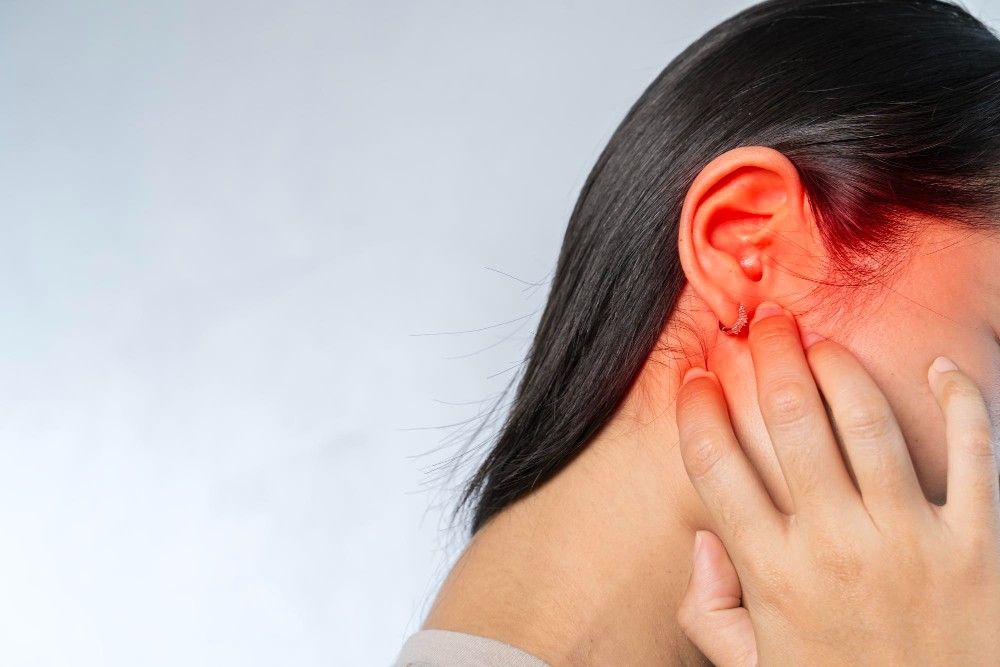
Let us discuss what a perforated eardrum actually is. A perforated eardrum is a hole or tear in the thin tissue that separates your outer ear from your middle ear. A perforated eardrum can cause hearing loss and can make middle ear infections more likely.
Most cases are treatable and recover on their own. This blog will help you understand symptoms, causes, recovery time, etc.
What Is a Perforated Eardrum?
A perforated eardrum (also known as a ruptured eardrum) is a hole or tear in the thin tissue that separates your outer ear from your middle ear. It can happen because of a bad infection or an injury in your ear.
A ruptured eardrum can affect your hearing or sense of balance and cause pain, ringing, etc. In many cases, this problem recovers on its own. The best way to prevent this disease is to protect yourself from any infection.
How Does a Ruptured Eardrum Happen?
The eardrum is a thin layer of tissue inside your ear. When sound waves enter the ear, it vibrates.
These vibrations help in sending sound to your inner ear and to your brain. But when this membrane makes a hole or tear in your ear, it is known as an eardrum perforation.
Perforated Eardrum Symptoms:
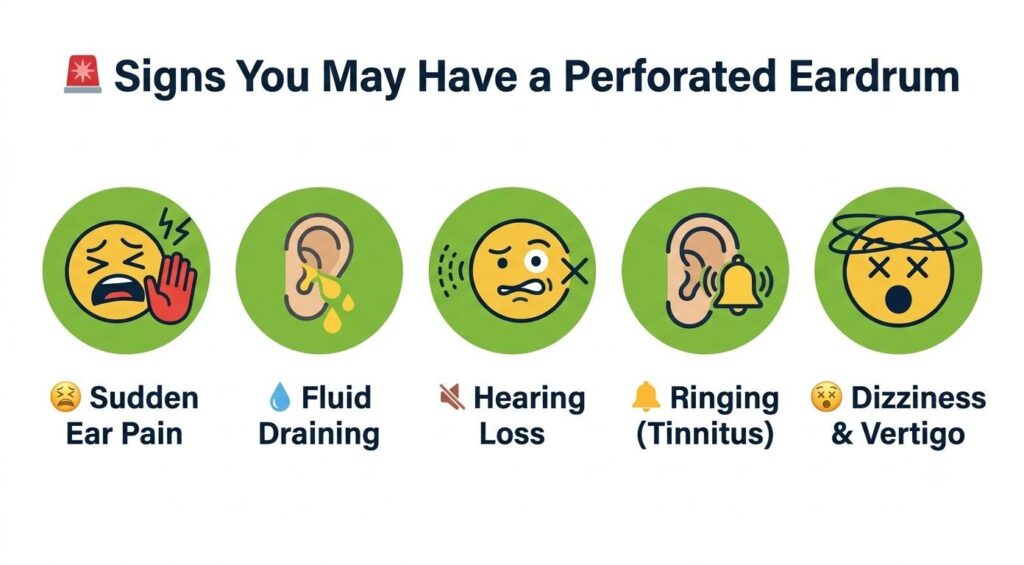
The symptoms can appear suddenly. Some people notice problems in hearing, and some notice pain in the ear. You might not know your eardrum is perforated right away, especially if nothing hit your ear.
Some common causes are:
- Ear pain: This pain can come on suddenly and may go away in no time.
- Fluid draining from your ear: It may look like blood or pus.
- Sudden hearing loss: Sounds may seem harder to hear.
- Tinnitus: This is a ringing, buzzing or humming sound in your ear that doesn’t come from outside.
- Vertigo: It’s a feeling of spinning, dizziness.
- Hearing loss
If you notice any of these symptoms, then you should see a doctor for advice. However, it can heal on its own, but on the safer side, you should consult a doctor.
Perforated Eardrum Causes:
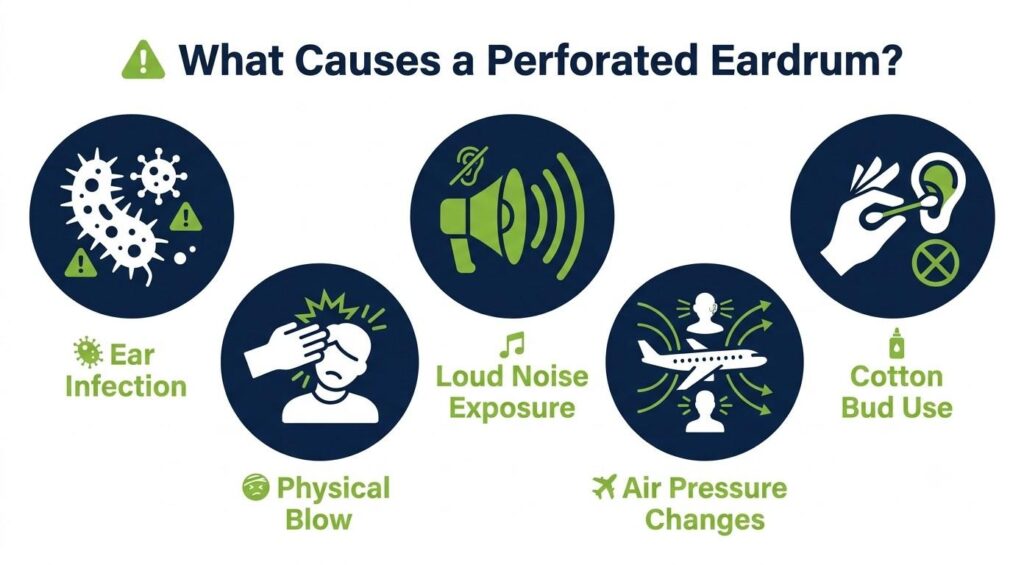
The most common cause of a perforated eardrum is a middle ear infection. Here are some other common causes of a perforated eardrum.
- Physical injury: Any object hit on your ear or any blow which caused a physical injury to your ear.
- Cotton Buds- It can also be caused by using cotton buds regularly in your ear.
- Exposure to loud noises- listening to music at high volume, attending a concert or any party.
- Changes in pressure, when you are in flight or doing scuba diving, can also cause you problems.
Who Is at Higher Risk?
The following people have a higher risk of getting this problem:
- It has been seen that children often have a high risk of experiencing ear infections.
- Those people who swim have a high risk of experiencing eardrum damage.
- People who work in high noisy environment, such as music concerts, clubs, restaurants have high risk.
How to Lower Your Risk of a Perforated Eardrum:
Protecting your ear from any injury or a noisy environment can lower the risk of a perforated eardrum.
- Clean with care: Use a clean cloth to wipe the outside of your ear, not with earbuds.
- Prevent ear in flight– Travelling in flight can cause pain because of the change in pressure. You should chew gum or yawn during takeoff and landing.
- Protect from a noisy environment– Try not to go to a noisy environment regularly to protect your ears.
- Treat the infection quickly. Middle ear infection includes ear pain, fever, or trouble hearing. See a doctor when you notice symptoms.
Things You Can Do If You Have a Perforated Eardrum
People can recover quickly with home care and medical advice.
Home care-
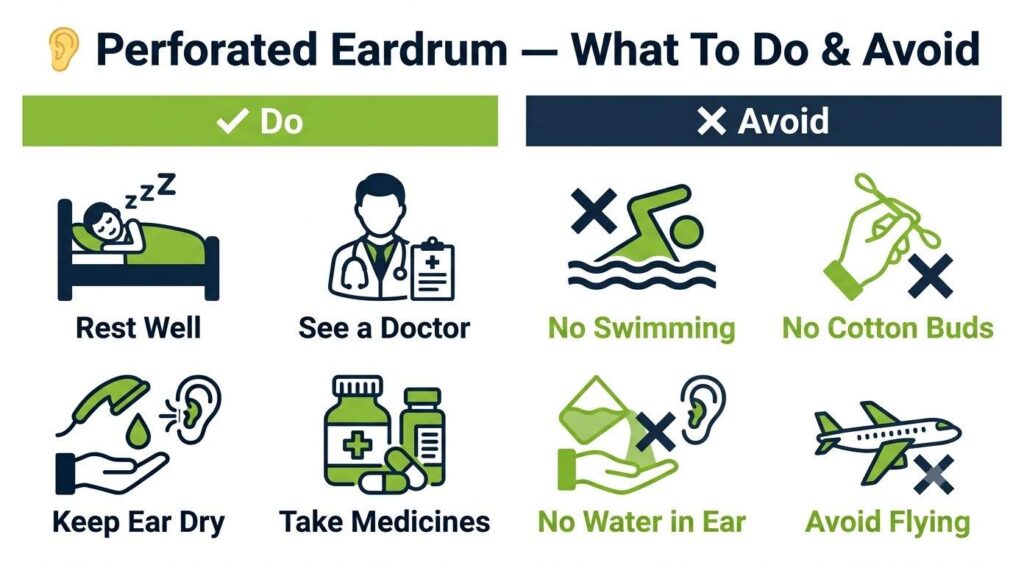
Things you should do-
The following people have a higher risk of getting this problem:
- It has been seen that children often have a high risk of experiencing ear infections.
- Those people who swim have a high risk of experiencing eardrum damage.
- People who work in high noisy environment, such as music concerts, clubs, restaurants have high risk.
Things you should not do-
- Do not go swimming.
- Use of eardrops without seeking advice from the doctor.
- Allowing water to go into your ear while bathing
- Using cotton buds
Flying With a Perforated Eardrum
Is It Safe to Fly with a Perforated Eardrum?
Many people feel safe flying with a Perforated Eardrum. However, you should avoid flying if you have undergone surgery in recent times. It can worsen the situation.
If travelling is not that important, then you should avoid it. But if it is urgent, then the following tips will help:
- You should yawn regularly.
- Chew gum during take-off and landing.
- Drink plenty of water to stay hydrated.
- You can use pressure-equalizing earplugs.
Diagnosis and Tests
How Is a Perforated Eardrum Diagnosed?
To check for a ruptured eardrum, your doctor will look inside your ear with a tool called an otoscope. It helps in seeing your eardrum clearly as it shines a light into your ear.
Your doctor may also suggest that you undergo some tests:
Otoscopy | Looks inside the ear canal and at the eardrum | Confirms if a perforation is present |
Audiometry (hearing test) | Measures hearing ability across different pitches | Checks how much hearing has been affected |
Tympanometry | Tests how well the eardrum moves | Helps assess the size and impact of the perforation |
At Audiology Planet, the hearing assessments help you determine whether the perforation has damaged your ear or not.
Perforated Eardrum Treatment
It has been seen that most cases heal without any surgical treatment. Well, treatment depends on the size of the tea in your ear, symptoms, duration, or infection is still present.
The following are the non-surgical and surgical treatments.
Non-surgical treatment
Many cases of a perforated eardrum heal naturally within 2 months.
Treatment may include:
- Keep your ear dry.
- Regular appointments with your doctor
- Taking proper rest
- Having medicines prescribed by your doctor.
- Proper monitoring of changes in hearing.
Your doctor will help you by providing medicines and will monitor changes. And will let you know if further treatment is required or not.
Surgical Treatment-
If the hole in your ear does not heal naturally, then surgery is needed.
A myringoplasty is a surgery that helps in repairing the damaged eardrum using a graft of small tissue. However, even more serious cases need a tympanoplasty.
Here are some key points:
- Your ear should stay dry in surgery.
- Healing may take more time, like several weeks.
- Most people experience improvements after some time.
Expected Duration - How Long Does a Ruptured Eardrum Take to Heal?

Healing time duration depends on the size of the tear and whether infection is still present or not.
Tear Size | Typical Healing Time | What Usually Happens | |
Small tear (< 2mm) | 2-4 weeks | Usually heals without treatment | |
Medium tear | 4-8 weeks | May need antibiotic eardrops | |
Large / persistent tear | 2-6 months+ | Surgery (myringoplasty) may be needed |
When should I see my healthcare provider?
You should call or see a doctor when the symptoms do not improve within several weeks, and the condition is getting worse.
The following are some points on when to see a doctor:
- If your symptoms continue for 3-4 weeks
- Your hearing loss situation gets even worse.
- If you are suffering from tinnitus
- When you cannot stand straight, dizziness
- Ear infections
- Blood coming from your ear.
- When you think a sharp object has hit you in your ear.
Why Choose Audiology Planet?
You should choose Audiology Planet rather than any other because, at Audiology Planet, patients receive a personalised hearing care experience from experts. Our every appointment focuses on understanding your conditions, symptoms and providing you with expert advice.
Why patients choose Audiology Planet
- As it provides experienced doctors with high knowledge of ear infections.
- We have our clinics in Sevenoaks and Tunbridge Wells.
- We provide individual appointments according to your needs.
- Professional support throughout your recovery
- Proper hearing assessments.
Frequently Asked Questions
Mostly ruptured eardrums take four to eight weeks to heal or recover. Smaller tears generally take less time to heal, like two to four weeks. While larger tears may require further surgical treatment and take more time.
If you are suffering from a perforated eardrum, then you should avoid going swimming, avoid water going into your ear, using cotton buds and listening to music at high volume. You should only use ear drops if it is suggested by your doctor.
You can tell if your eardrum is ruptured by noticing some common symptoms like ear pain, hearing loss, dizziness, and tinnitus. A doctor can confirm that your eardrum is ruptured.
Not really, mostly it is seen that cases are not that serious and heal naturally within 2-4 weeks. However, in some cases, repeated infection and hearing loss should always be addressed.
No, a burst eardrum does not cause deafness. Most hearing loss is caused by a perforated eardrum and is temporary. Hearing returns after a proper care and healing period.
You can speed up your healing by avoiding getting water in your ear, going to a noisy environment, following doctor’s advice, and attending appointments.

Consultant Audiologist
Dr. Jay Jindal
Dr. Jay Jindal, Consultant Audiologist, has 20+ years NHS and private experience.