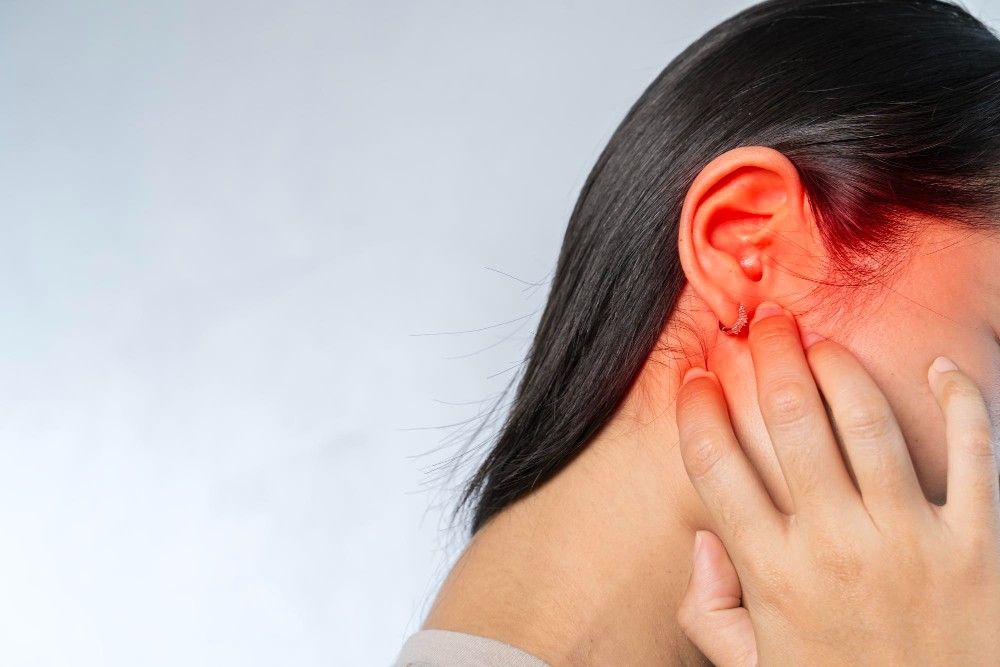





At Audiology Planet, our doctors regularly help patients with water buildup in the ear, especially during the swimming season.
The problem of water getting stuck in your ear is very common. It can happen after a swim or shower. This sensation can make you feel uncomfortable and distracted. You may notice less hearing, a blocked feeling, or even a gentle, flashy sound.
In many cases, the trapped water in the ear clears on its own. But if water remains in the ear canal for a prolonged period, it can lead to swimmer’s ear, also known as otitis externa.
This guide will help you safely remove water from your ear, understand what causes the problem, and know when to see a doctor.
Signs and Symptoms of Water Trapped in Your Ear
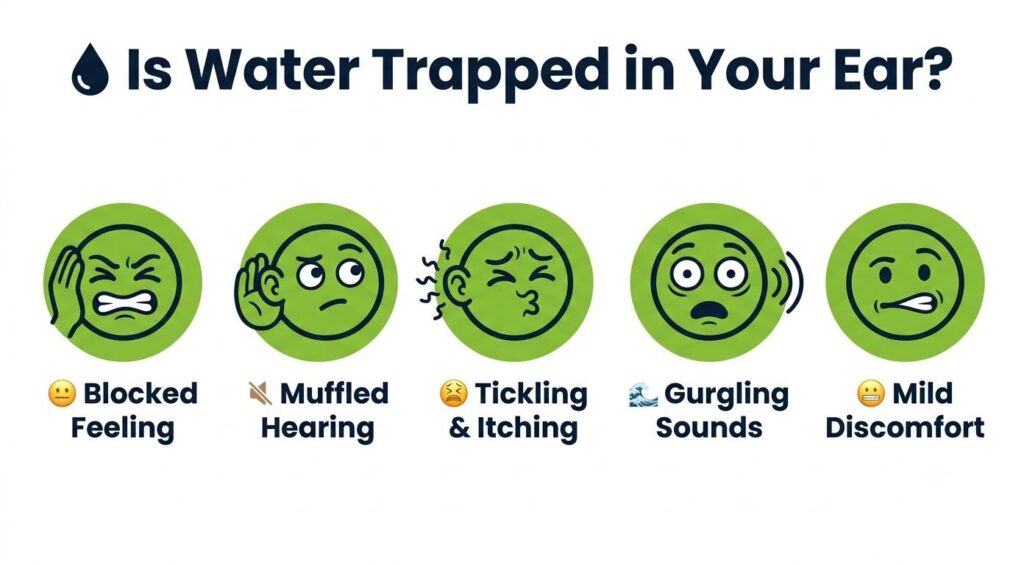
The common symptoms of water trapped in the ear include:
- A blocked or full feeling inside the ear
- Reduced or muffled hearing
- A tickling or itching sensation
- Gurgling or sloshing sounds when moving your head
- Mild discomfort when touching the ear
- Fluid draining from the ear canal
- A sensation similar to pressure changes on an airplane
If these symptoms persist for more than 3 days, you may be developing swimmer’s ear.
Also read related article: Woke Up With Muffled Hearing in One Ear? Here’s What It Could Mean
What Happens When Water Gets Stuck in Your Ear?
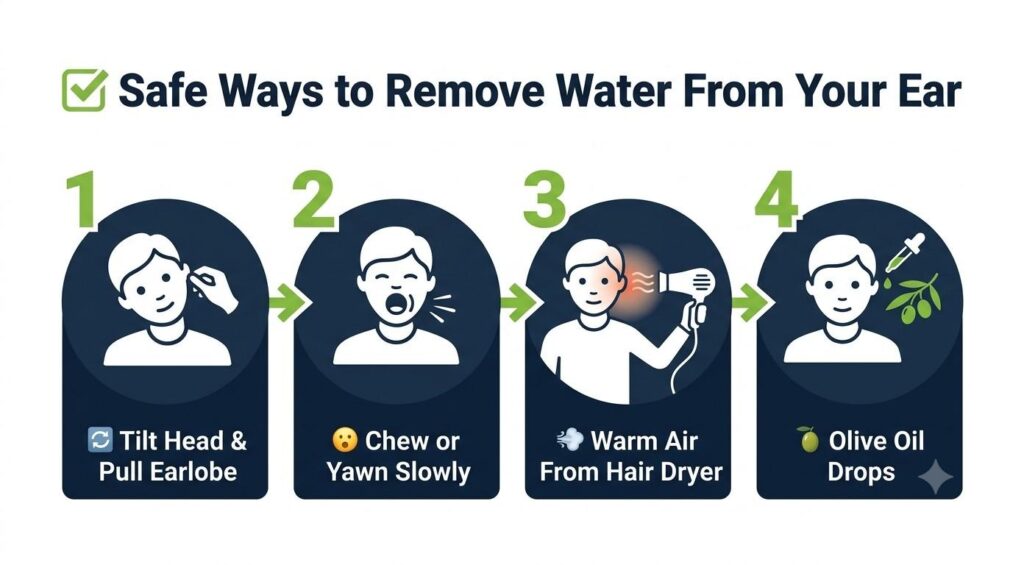
There are several ways to get the water out of your ear at home.
1. The Gravity Method
The gravity method is the easiest method.
- First, tilt your head towards the affected ear.
- Slowly and gently pull your earlobe downward.
- Hold that same position for 40 to 60 seconds.
- And then, allow the gravity to drain the water that was trapp
2. Move Your Jaw
Jaw movement can help loosen the trapped moisture.
- Firstly, tilt your head sideways.
- Then, open and close your mouth slowly.
- Just pretend to chew or yawn.
- You should repeat this several times.
This movement helps to open the ear canal and release the water.
3. Use Warm Air
A hair dryer can help you evaporate the water/moisture.
- First, set the heat setting to the lowest.
- You should keep the hair dryer at least 30 cm away.
- Move the dryer continuously.
- And limit the use to 30 seconds.
- Important point- Never set your dryer to high heat directly on your ear
4. Olive oil drops
Olive oil is a home remedy for earwax buildup.
- Firstly, warm a small amount of olive oil.
- Then place 2 or 3 drops into the ear.
- Lie on your side for several minutes.
- And finally, drain the ear afterwards.
Dos for Getting Water Out of Your Ears
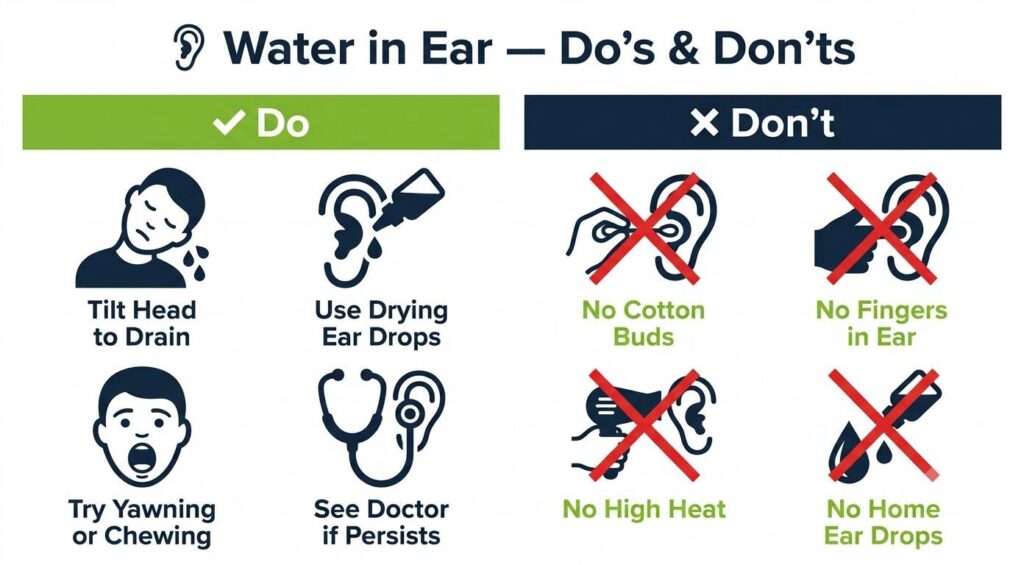
- Tilt your head and let the gravity do its work.
- Dry your outer ear with a soft towel.
- Try movements like chewing or yawning.
- Use some suitable over-the-counter drying drops.
- Keep your ear dry while it recovers.
- Go to the doctor if symptoms continue for two days.
What Not to Do-
You should avoid the following-
- Do not use cotton buds.
- Do not insert fingers into the ear canal.
- Do not use undiluted alcohol or vinegar.
- Do not apply high heat from a hair dryer.
- Do not ignore symptoms that you are feeling.
- Do not attempt home ear medications.
DO’S | DON’T’S |
Tilt your head to drain water | Do not use earbuds |
Dry the outer ear gently | Do not insert objects in ear |
Try the Valsalva manoeuvre | Do not use high heat |
Use drying ear drops | Do not use home syringing |
Seek advice if symptoms continue | Do not ignore pain |
Can Trapped Water Cause an Ear Infection?
Yes, trapped water can cause an ear infection. Water trapped in the ear for days can lead to swimmer’s ear.
The warm, moist environment helps encourage bacteria and fungi to grow quickly.
People who are at high risk include:
- Regular swimmers
- Users who use Earbuds
- People with eczema
- Individuals who have narrow ear canals
Some warning signs include:
- Increasing pain
- Severe itching
- Redness around the ear
- Yellow or green discharge
- Worsening hearing loss
- Persistent fullness
If you notice these symptoms, contact an audiologist or GP.
Also read related article: Ear Wax Color Chart: What Does Your Earwax Color Mean?
How to Prevent Water from Getting Trapped in Your Ear
You can reduce the risk by following these tips:
- Wear earplugs while swimming.
- Dry your ears after swimming.
- Tilt your head after showering.
- Avoid swimming in dirty water.
- Never place objects inside your ears.
- Consider custom earplugs if you swim regularly.
Myths About Removing Water From Your Ear
MYTH | FACT |
Cotton buds remove water | They push moisture deeper |
Hydrogen peroxide is always safe | It may irritate healthy skin |
Water always drains quickly | It can remain trapped for days |
One head tilt always works | Multiple attempts may be needed |
Many home remedies for water in the ear problems lack evidence. You should always choose safe methods.
When Should You See an Audiologist or GP?

You should seek professional advice if:
- Water remains trapped for more than three or four days.
- If you develop pain or swelling.
- Discharge appears from the ear.
- If your hearing becomes worse.
- If you have a perforated eardrum.
- If you have gone through a history of ear surgery.
At Audiology Planet, our audiologists can assess the water trapped in the ear and swimmer’s ear and recommend treatment.
Conclusion: Final Thoughts
Water trapped in the ear is usually harmless and often resolves quickly. Safe techniques such as gravity, jaw movement, and warm air can help remove moisture.
If symptoms persist or signs of swimmer’s ear develop, seek advice from a qualified audiologist or GP.
Frequently Asked Questions (FAQs)
The quickest method is to tilt your head and gently pull the ear downward. Gravity will remove the water within a minute.
Yes, mostly every case resolves naturally within some hours. If symptoms persist, try safe home remedies.
Water can stay trapped in the ear for some hours or even days. If it lasts for more than 2 to 4 days, you should see a doctor.
You can know if water is still in your ear by noticing these: a blocked feeling, muffled hearing, tickling sensations, or gurgling sounds may indicate trapped water.
The Valsalva maneuver can help you in releasing the deeper moisture. You should avoid inserting objects into the ear.

Consultant Audiologist
Dr. Jay Jindal
Dr. Jay Jindal, Consultant Audiologist, has 20+ years NHS and private experience.