



What Is Ear Popping?
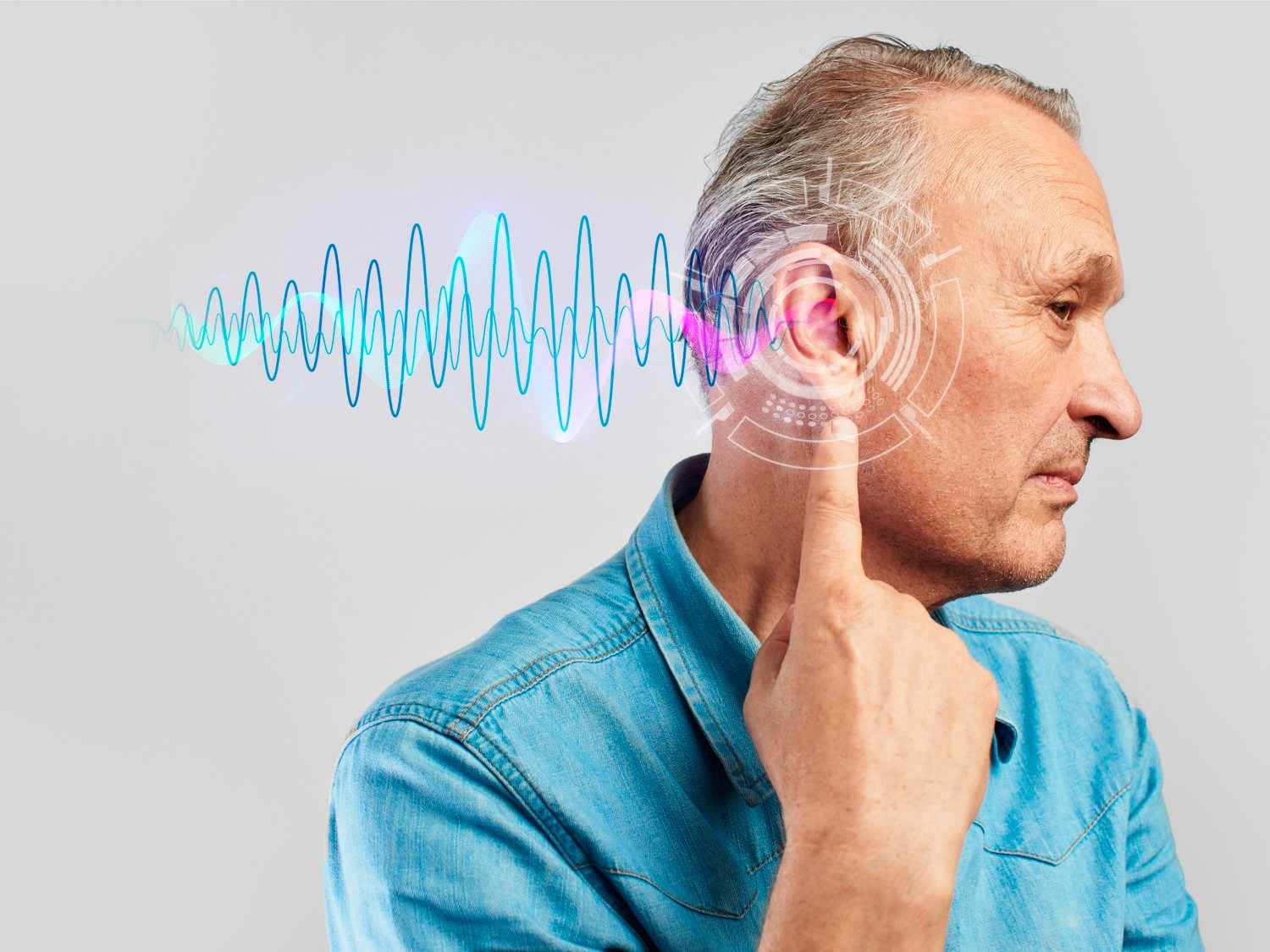
Ear popping is the sensation or sound of a pop or crack inside your ear. This popping happens when the pressure on both sides of the eardrum is equalized. This process is usually controlled by the Eustachian tube, which connects the middle ear to the back of the nose and throat.
Usually, the Eustachian tube opens up when you do activities like swallowing, yawning, or chewing. This helps air flow into your middle ear, balancing pressure and maintaining normal hearing. When the tube becomes blocked or malfunctions, you may experience ear popping, discomfort, pressure, or temporary hearing problems.
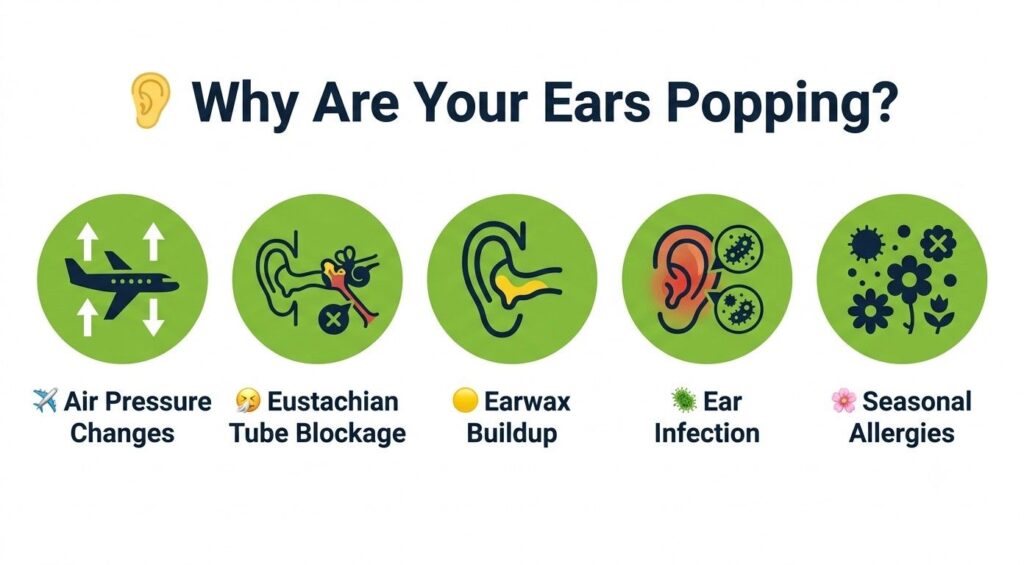
Common Causes of Ear Popping:
1. Changes in Air Pressure
One of the most common reasons for ear popping is a sudden change in atmospheric pressure. This often happens during:
- Travelling on a flight
- Driving in the mountains
- Scuba diving
- Elevator in tall buildings
When the altitude changes, the pressure outside the ear also changes more quickly than the pressure inside the middle ear. The Eustachian tube helps open and equalize pressure, creating the familiar popping sensation.
2. Eustachian Tube Dysfunction
When the Eustachian tube is blocked by congestion or swelling, it can’t regulate pressure as effectively. This condition is called Eustachian Tube Dysfunction (ETD).
Common causes are:
- Allergies
- Upper respiratory infections
- Common cold
- Nasal congestion
- Sinus infections.
People with ETD generally experience continuous ear popping, along with fullness and muffled hearing.
3. Earwax Build-Up
Excessive earwax can temporarily block the ear canal, creating pressure and causing popping or crackling sounds. If you clean your ears with cotton swabs, then it may push the wax deeper and worsen the blockage.
Aldo read related article: 5 Reasons NOT to Use Cotton buds in the Ears
4. Middle Ear Infection
The fluid accumulation behind the eardrum is due to a middle-ear infection, which can disrupt pressure regulation and cause popping sensations. Ear infections are very common in children, but can also affect adults.
5. Allergies
Seasonal allergies can cause you to experience swelling of the nasal passages and Eustachian tubes. This blockage prevents normal airflow into the middle ear, leading to pressure, popping, and discomfort.
Also read the related article: Woke Up With Muffled Hearing in One Ear?
Is it safe to pop your ears?
Popping your ears is generally safe. It usually requires a little more effort than just moving your mouth. It’s very important to be gentle regardless of any technique you try. If your symptoms get worse, consult a doctor and stop trying to clear your ears.
Symptoms That May Accompany Ear Popping
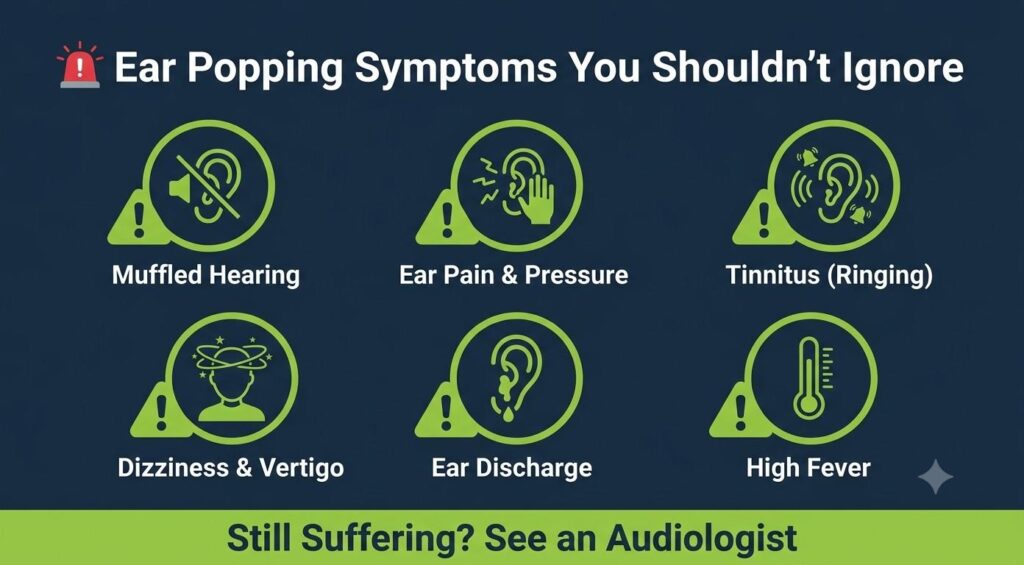
Common symptoms include:
- Muffled hearing
- Temporary hearing loss
- Ear fullness or pressure
- Ringing in the ears (tinnitus)
- Crackling sounds while swallowing
- Ear pain
- Difficulty balancing pressure
- Dizziness or vertigo
If your symptoms persist for several days or worsen, it is important to seek medical evaluation.
What is the easiest way to pop your ears?
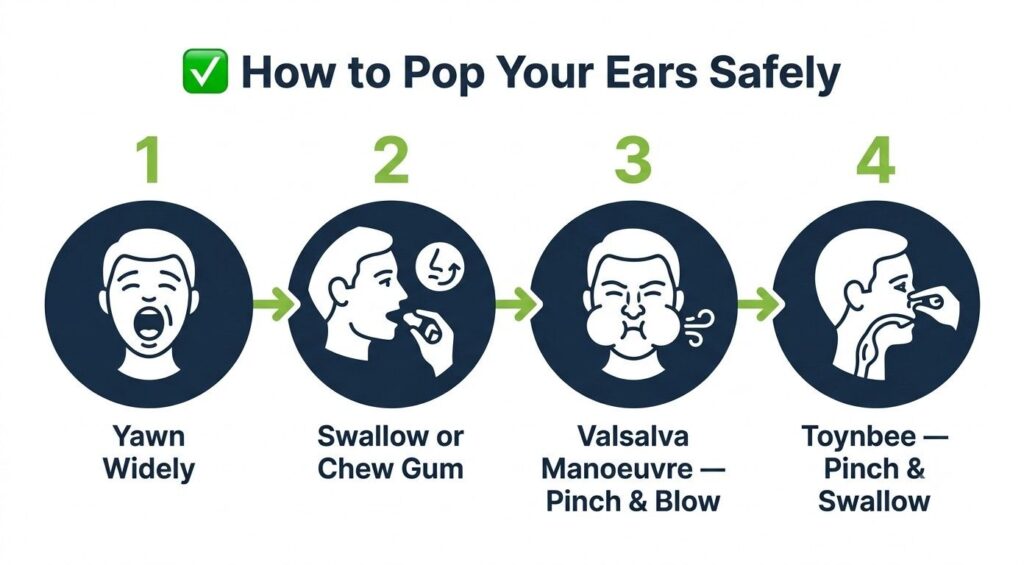
There are several techniques you can try to pop your ears:
- Swallowing
When you swallow, your muscles automatically open your eustachian tubes. This tube connects the middle ear to the back of your nose.
This is why you may have heard people recommend chewing gum on aeroplanes. It’s not the gum itself that helps pop your ears. But gum creates saliva. So, as you repeatedly swallow that saliva, it can help in opening your tubes and keep the air flowing.
- Yawn
Like swallowing or yawning, they open your eustachian tubes to equalize the pressure in your ears. The bigger and more convincing the yawn, the better the chances it’ll do the trick. If you can’t yawn on cue, try a fake yawn. Open your mouth wide while breathing in and out.
- The Valsalva Maneuver-
The Valsalva Maneuver helps in relieving pressure by forcing air through your eustachian tubes. You can do this by closing your mouth, pinching your nostrils closed, and breathing out forcefully.
- The Toynbee maneuver-
The Toynbee maneuver takes a different approach to opening your eustachian tubes. Rather than forcing air into them, this way helps to open the tube. You can do this by closing your mouth, pinching your nostrils, and swallowing.
Getting help for plugged ears
If you’re travelling by plane, scuba diving, etc., your blocked ears likely aren’t a major problem and should resolve quickly. But blocked ears that remain for days or are accompanied by other symptoms can indicate a more serious issue.
You should pay attention to issues like:
- Ear Pain
- Dizziness
- Tinnitus
- Hearing loss
- Discharge from your ear.
If you see these issues, then it’s time to see a healthcare provider. They’ll help you determine the root cause of your issues and your treatment plan.
Can Ear Popping Affect Hearing?
Yes, but temporary, as temporary hearing changes are very common when pressure builds up in the middle ear. Most people notice muffled hearing until the pressure is equalized. However, Eustachian tube dysfunction, untreated infections, or chronic fluid buildup can lead to more hearing problems. Early treatment usually prevents long-term complications.
When Should You See a Doctor?
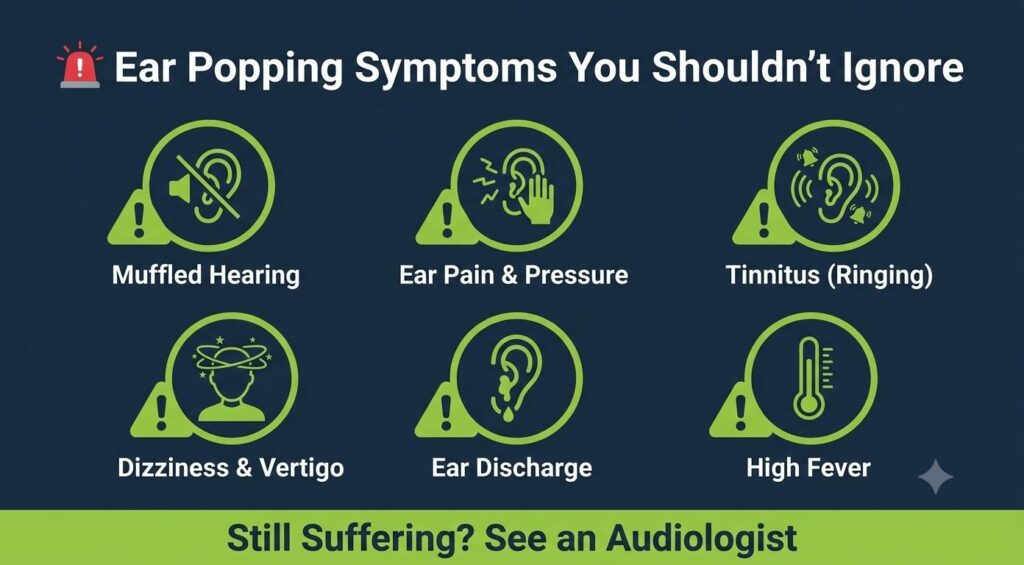
Although if ear popping is occasional, then it is normal, if not, then you should consult a doctor when you experience:
- Consistent ear popping lasting for more than two days.
- Severe ear pain
- Hearing loss
- High fever
- Dizziness
- Symptoms following head injury
Frequently Asked Questions (FAQs)
Yes. Occasional ear popping during flying, yawning, swallowing, or driving in the mountains is normal.
Allergies, jaw disorders, earwax buildup, sinus congestion, or Eustachian tube dysfunction can cause popping in the ear.
Not really, as stress itself doesn't directly cause ear popping, but it can contribute to TMJ disorders and jaw clenching, which may create popping sensations near the ears.
You can worry only if you are suffering from pain or hearing loss. If there is no pain or hearing loss, then there is nothing to worry about. However, if you are facing this issue repeatedly, you should see a doctor.

Consultant Audiologist
Dr. Jay Jindal
Dr. Jay Jindal, Consultant Audiologist, has 20+ years NHS and private experience.